New rules give British households right to sell solar power back to energy firms
Substation Relay Protection Training
Our customized live online or in‑person group training can be delivered to your staff at your location.
- Live Online
- 12 hours Instructor-led
- Group Training Available
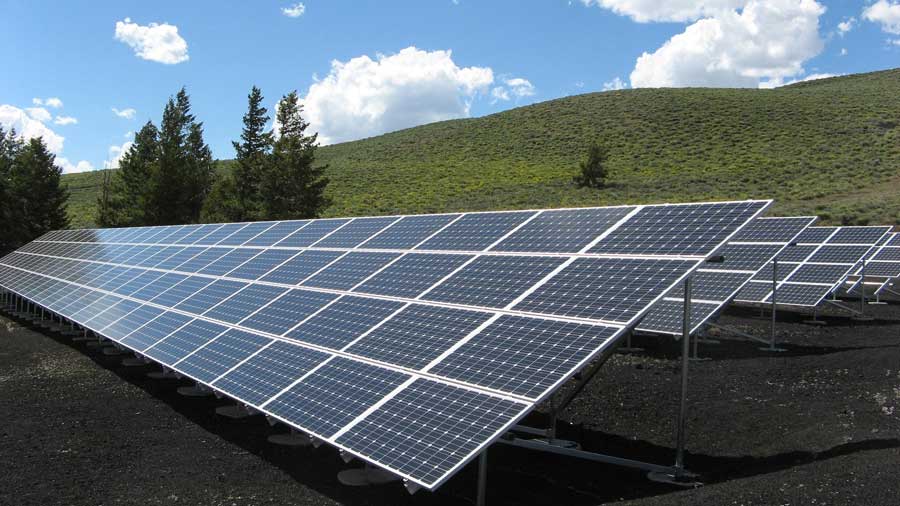
UK Smart Export Guarantee enables households to sell surplus solar energy to suppliers, with dynamic export tariffs, grid payments, and battery-friendly incentives, boosting local renewable generation, microgeneration uptake, and decarbonisation across Britain.
The Important Points
UK Smart Export Guarantee pays homes for exporting surplus solar power to the grid via supplier tariffs.
Suppliers must offer export tariffs that reflect wholesale market prices.
Households earn for kWh exported, lowering bills and payback periods.
Supports batteries to shift exports and reduce local network constraints.
Enables community and microgeneration projects to sell power to utilities.
Drives decarbonisation by displacing fossil generation with local solar.
Britain’s biggest energy companies will have to buy renewable energy from their own customers through community-generated green electricity models under new laws to be introduced this week.
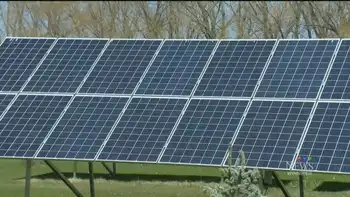
Homeowners who install new rooftop solar panels from 1 January 2020 will be able to lower their bills as many seek to cut soaring bills by selling the energy they do not need to their supplier.
A record was set at noon on a Friday in May 2017, when solar energy supplied around a quarter of the UK’s electricity, and a recent award that adds 10 GW of renewables indicates further growth.
However, solar panel owners are not always at home on sunny days to reap the benefit. The new rules will allow them to make money if they generate electricity for the grid.
Some 800,000 householders with solar panels already benefit from payments under a previous scheme. However, the subsidies were controversially scrapped by the government in April, with similar reduced credits for solar owners seen in other regions, causing the number of new installations to fall by 94% in May from the month before.
Labour accused the government last week of “actively dismantling” the solar industry. The sector will still struggle this summer as the change does not come in for another seven months, so homeowners have no incentive to buy panels this year.
Chris Skidmore, the minister for energy and clean growth, said the government wanted to increase the number of small-scale generators without adding the cost of subsidies to energy bills. “The future of energy is local and the new smart export guarantee will ensure households that choose to become green energy generators will be guaranteed a payment for electricity supplied to the grid,” he said. The government also hopes to encourage homes with solar panels to install batteries to help manage excess solar power on networks.
Greg Jackson, the founder of Octopus Energy, said: “These smart export tariffs are game-changing when it comes to harnessing the power of citizens to tackle climate change”.
A few suppliers, including Octopus, already offer to buy solar power from their customers, often setting terms for how solar owners are paid that reflect market conditions.
“They mean homes and businesses can be paid for producing clean electricity just like traditional generators, replacing old dirty power stations and pumping more renewable energy into the grid. This will help bring down prices for everyone as we use cheaper power generated locally by our neighbours,” Jackson said.
Léonie Greene, a director at the Solar Trade Association, said it was “vital” that even “very small players” were paid a fair price. “We will be watching the market like a hawk to see if competitive offers come forward that properly value the power that smart solar homes can contribute to the decarbonising electricity grid,” she said.