What Is A Fuse Explained
By R.W. Hurst, Editor
Substation Relay Protection Training
Our customized live online or in‑person group training can be delivered to your staff at your location.
- Live Online
- 12 hours Instructor-led
- Group Training Available
Download Our OSHA 4475 Fact Sheet – Being Aware of Arc Flash Hazards
- Identify root causes of arc flash incidents and contributing conditions
- Apply prevention strategies including LOTO, PPE, and testing protocols
- Understand OSHA requirements for training and equipment maintenance
A fuse is an overcurrent protection device that interrupts electrical flow when current exceeds safe limits, preventing conductor overheating, equipment damage, and fire risk caused by overloads or short circuits. It protects electrical systems by isolating fault conditions before damage can spread.
What Is A Fuse?
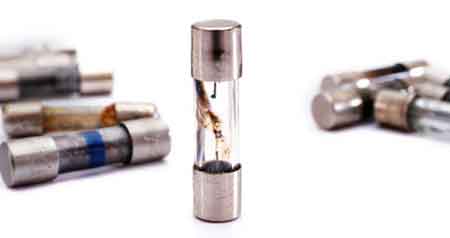
A fuse is a protective electrical safety device designed to sacrifice itself in order to protect the rest of the circuit. When the current exceeds the system’s design capacity, the fuse element melts and opens the circuit, stopping the fault before heat, arc energy, or conductor damage can escalate into a larger failure.
This behavior is what makes a fuse fundamentally different from wiring, switches, or receptacles. Those components are expected to survive operating conditions. A fuse is designed to fail deliberately so the system does not.
In real installations, fuse selection directly affects fault isolation, coordination with upstream devices, available fault current limitation, and system recovery time. An undersized fuse causes nuisance interruptions. An oversized fuse allows damage to propagate. Protection quality depends not only on the presence of a fuse, but on how precisely its rating, speed, and application class match the circuit it protects.
A fuse is therefore not simply a protective accessory. It is a control point for how electrical energy behaves when something goes wrong.
Key purposes of a fuse include:
-
Protecting wiring, devices, and people from dangerous overcurrent
-
Isolating faults quickly to prevent fire or equipment damage
-
Providing reliable, cost-effective safety in electrical systems
To understand how engineers maintain electrical system safety, explore our electrical protection channel, which covers essential devices and best practices.
Professionals who design, test, or maintain protection systems often build deeper competence through formal power system training focused on real fault behavior and coordination accuracy. Programs commonly used in industry include:
Electricity Today T&D Magazine Subscribe for FREE
- Timely insights from industry experts
- Practical solutions T&D engineers
- Free access to every issue
Short Circuit Study & Protective Device Coordination
Arc Flash Analysis/Study - IEEE 1584 Update
These courses address how protection devices operate under fault conditions, how coordination is verified, and how incident energy is controlled in working environments.
How a Fuse Works
These devices function by creating a controlled weak point in a circuit. When the current surpasses the rating, the fuse protective element melts, breaking the connection. Different applications require different responses: fast-acting fuse designs protect sensitive electronics, while time-delay types (slow-blow) allow temporary surges, such as those from motor start-ups, without shutting down the circuit.
Key operational fuse concepts include:
-
Time-current curves, which show how quickly a device reacts to varying levels of overcurrent
-
Selective coordination, ensuring only the faulty section of a system disconnects while the rest remains powered
-
Energy limitation, often described by I²t ratings, which measure the total energy let through during fault conditions
Fuse Ratings and Standards
Every fuse carries specific ratings that define its performance. The current rating shows how much current it can safely carry, while the voltage rating ensures it can interrupt circuits at the required level. Breaking capacity (or interrupting rating) is equally important, as it defines the maximum fault current the device can clear without failing.
To ensure safety and consistency, manufacturers comply with international standards:
-
IEC 60269, covering low-voltage fuse applications globally
-
UL 248, used widely across North America
-
Local electrical codes, which define installation and safety requirements in homes, businesses, and industry
One important safeguard against dangerous wiring faults is AFCI protection, which helps prevent electrical fires caused by arc faults. For a deeper insight, see our guide on arc fault circuit interrupter protection devices, which detect and stop arcing conditions.
Fuse Construction and Materials
The construction of fuses varies depending on use. The fusible link may be made of copper, silver, zinc, or alloys selected for predictable melting behavior. The body may be glass, ceramic, or molded plastic. Sand-filled designs improve arc quenching and safety at higher fault levels. These choices directly affect performance, durability, and inspection methods.
Types of Fuses
Different styles of fuses are designed for various environments. Cartridge types are commonly used in panels and appliances, while blade-style elements predominate in automotive systems. High-voltage fuses protect power transmission and distribution equipment.
Other notable types include:
-
Resettable PTC fuses, which recover automatically once the fault clears
-
Thermal links, which trigger in response to overheating in appliances
-
NH and expulsion fuse designs, used in industrial and utility distribution systems
-
Specialty components for semiconductors, solar arrays, and electronics
Fuses in Everyday Use
In household systems, a blown fuse is often the first sign of trouble, typically caused by overloaded circuits or faulty appliances. When this happens, the affected area loses power until the component is replaced.
Safe replacement practices include:
-
Always matching the fuse type and rating specified by the manufacturer or code
-
Turning off the power before removing or installing a new element
-
Investigating the cause of failure before restoring the circuit
-
Considering an upgrade from older fuse boxes to breaker panels for convenience and safety
Methods for assessing risks and planning protective measures. A solid understanding of fault current calculation is essential for designing effective short-circuit protection systems.
How Is a Fuse Different from a Circuit Breaker?
Both devices protect against overcurrent, but their operation and convenience differ. A fuse melts and disconnects permanently, while a circuit breaker trips a mechanical switch that can be reset. Different circuit breaker types are designed to protect against short circuits and overloads in specific applications.
Sign Up for Electricity Forum’s Electrical Protection Newsletter
Stay informed with our FREE Electrical Protection Newsletter — get the latest news, breakthrough technologies, and expert insights, delivered straight to your inbox.
Main differences include:
-
Function: a fuse relies on melting; a breaker uses an electromechanical trip
-
Reusability: fuses are single-use, breakers reset and reuse
-
Responsiveness: breakers typically react faster in modern systems
-
Flexibility: breakers offer adjustable ratings for different loads
-
Cost: fuses are cheaper initially; breakers save money over time
-
Size: fuses are smaller, while breakers are larger and panel-mounted
-
Indicators: breakers often include visual trip flags; fuses may require inspection
Industrial and Utility Fuse Applications
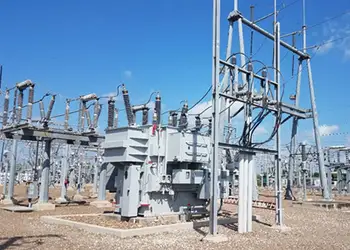
Beyond homes and small devices, fuses play a vital role in heavy industry and power distribution. High-voltage protection is critical in substations and transmission lines. NH fuses, expulsion fuses, and bayonet designs are widely used in these environments, offering robust fault-clearing capacity while meeting strict safety standards.
The fuse remains one of the most straightforward and dependable forms of overcurrent protection. By providing fast, automatic disconnection under fault conditions, they safeguard wiring, devices, and people from electrical hazards. While circuit breakers have become more common in modern installations, fuses continue to serve in automotive, industrial, and high-voltage applications worldwide. Choosing the right circuit protection device and understanding its ratings, standards, and construction are essential for maintaining safe and reliable electrical systems.
Related Articles
