Why Arc Flash Analysis Training Matters
Arc flash hazards cannot be managed using rules of thumb or generic PPE categories. Arc Flash Analysis training matters because it teaches how real electrical system conditions translate into measurable injury risk. By understanding incident energy calculations, equipment labeling, and boundary determination, organizations can make defensible safety decisions, reduce severe burn risk, and meet regulatory expectations while supporting safer energized work practices.
This course should be taken with our Power System Fundamentals Course - April 10, 2026
This course is also a companion to our Short Circuit Analysis/Study And Protective Device Coordination Course - April 16-17, 2026
Arc Flash Analysis Training Overview
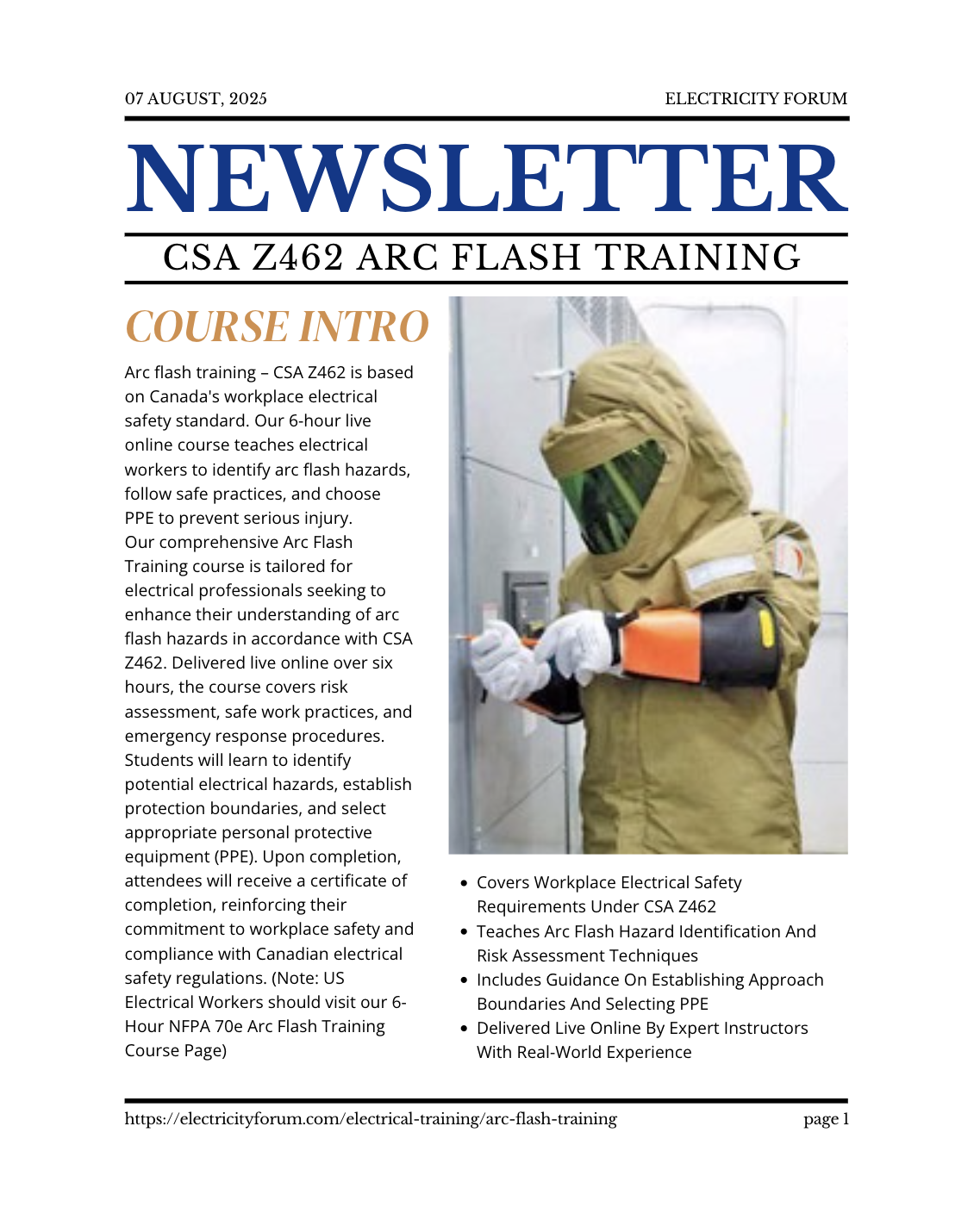
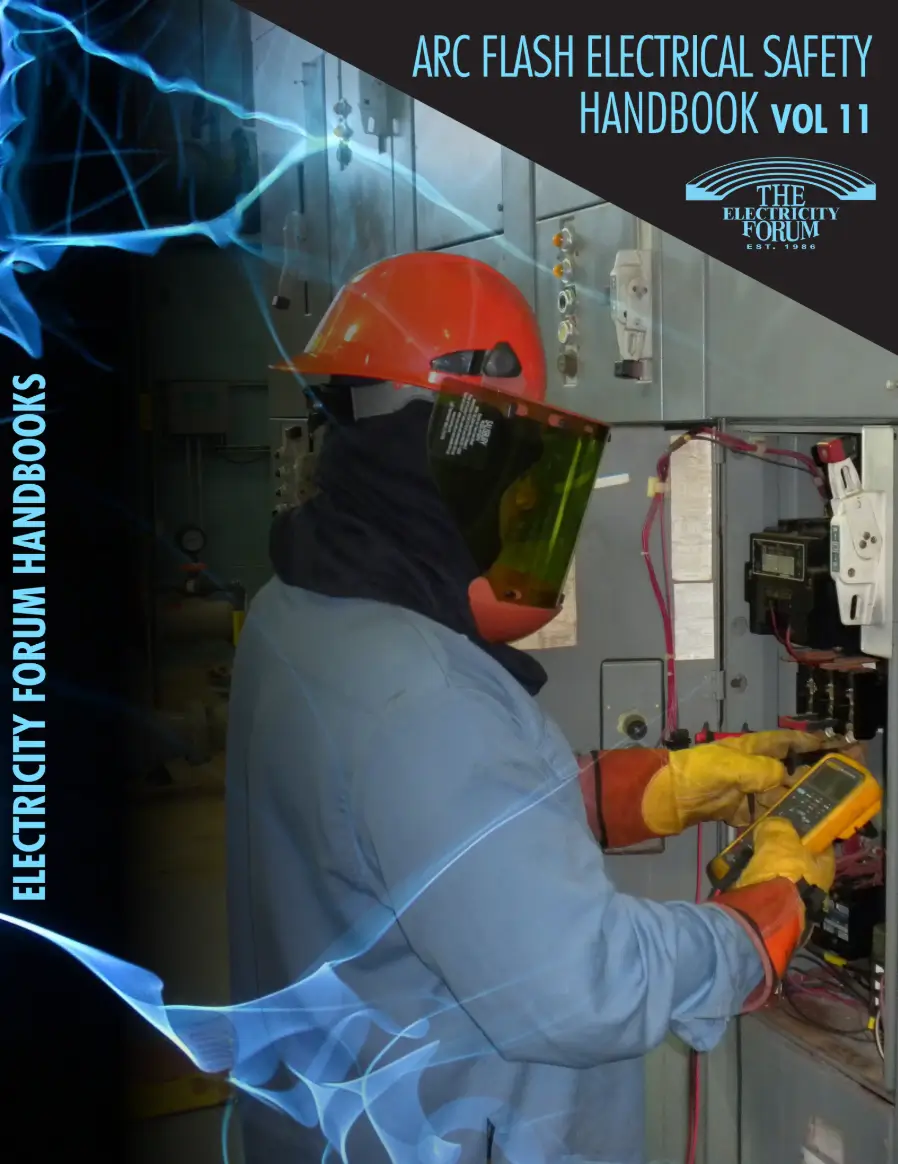
Arc Flash Analysis Training equips electrical professionals with the knowledge and skills to conduct comprehensive arc-flash hazard analyses, calculate incident energy levels, and apply NFPA 70E, CSA Z462, and IEEE 1584-2018 standards to real-world systems. Participants will learn to evaluate fault current, determine arc flash boundaries, and create compliant arc flash labels that accurately define risk and PPE requirements for energized work. This two-day, instructor-led course combines theory, calculation practice, and live software demonstrations to help professionals perform and interpret full arc flash studies with confidence.
This course emphasizes the direct link between arc flash studies, short-circuit analysis, and protective device coordination, ensuring that equipment ratings, relay settings, and system protection schemes are optimized for both safety and reliability. Participants gain practical insight into system modelling, arcing fault scenarios, and coordination analysis using professional engineering software tools. The course also includes updates from IEEE 1584-2018, highlighting the latest methodologies for incident energy and arcing current calculations.
Beyond calculations, this training teaches participants how to implement and maintain a compliant electrical safety program that integrates labelling, documentation, and worker protection policies. It addresses updating arc flash studies when system changes occur, reviewing results during safety audits, and ensuring continuous compliance with OSHA, NFPA 70E, and CSA Z462 requirements. Participants will also learn how to develop corporate-level strategies for program maintenance and ongoing worker training.
This Arc Flash Analysis Training course is ideal for electrical engineers, maintenance supervisors, safety coordinators, and facility managers responsible for industrial, commercial, and institutional power distribution systems. It also benefits consultants, utilities, and engineering firms that design, analyze, or maintain electrical infrastructure that requires arc flash studies and documentation.
Learning Outcomes
Upon completing this course, participants will be able to:
-
Perform comprehensive arc flash, short-circuit, and coordination studies for industrial and commercial systems.
-
Calculate incident energy, arcing current, and arc flash boundaries in compliance with NFPA 70E, CSA Z462, and IEEE 1584-2018.
-
Create and maintain compliant arc flash labels and PPE selection programs.
-
Integrate study results into an ongoing electrical safety program aligned with OSHA and insurance standards.
-
Understand and apply the fundamentals of short-circuit studies to improve system reliability.
-
Identify and mitigate high-risk electrical equipment through accurate modelling and coordination analysis.
-
Interpret study results to propose cost-effective engineering solutions that reduce hazards.
-
Maintain documentation, labelling, and periodic updates required for safety audits and insurance compliance.
-
Save time and reduce errors using proven software tools and data collection methods.
Related Courses