Battery-electric buses hit the roads in Metro Vancouver
Substation Relay Protection Training
Our customized live online or in‑person group training can be delivered to your staff at your location.
- Live Online
- 12 hours Instructor-led
- Group Training Available
TransLink Electric Bus Pilot launches zero-emission service in Metro Vancouver, cutting greenhouse gas emissions with fast-charging stations on Route 100, supporting renewable energy goals alongside trolley buses, CNG, and hybrid fleets.
How It All Fits Together
TransLink's Metro Vancouver program deploying charging, zero-emission buses on Route 100 to cut emissions and fuel costs.
Cuts ~100 tonnes GHG and saves $40k per bus annually
Five-minute on-route charging at terminals on Route 100
Pilot data to guide zero-emission fleet transition by 2050
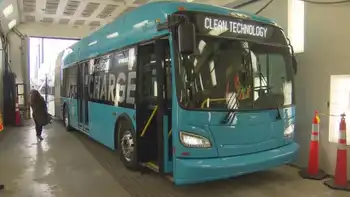
TransLink's first battery-electric buses are taking to the roads in Metro Vancouver as part of a pilot project to reduce emissions, joining other initiatives like electric school buses in B.C. that aim to cut pollution in transportation.
The first four zero-emission buses picked up commuters in Vancouver, Burnaby and New Westminster on Wednesday. Six more are expected to be brought in, and similar launches like Edmonton's first electric bus are underway across Canada.
"With so many people taking transit in Vancouver today, electric buses will make a real difference," said Merran Smith, executive director of Clean Energy Canada, a think tank at Simon Fraser University, in a release.
According to TransLink, each bus is expected to reduce 100 tonnes of greenhouse gas emissions and save $40,000 in fuel costs per year compared to a conventional diesel bus.
"Buses already help tackle climate change by getting people out of cars, and Vancouver is ahead of the game with its electric trolleys," Smith said.
She added there is still more work to be done to get every bus off diesel, as seen with the TTC's battery-electric buses rollout in Toronto.
The buses will run along the No. 100 route connecting Vancouver and New Westminster. They recharge — it takes about five minutes — at new charging stations installed at both ends of the route while passengers load and unload or while the driver has a short break.
Right now, more than half of TransLink's fleet currently operates with clean technology, offering insights alongside Toronto's large battery-electric fleet for other cities.
In addition to the four new battery-electric buses, the fleet also includes hundreds of zero-emission electric trolley buses, compressed natural gas buses and hybrid diesel-electric buses, while cities like Montreal's first STM electric buses continue to expand adoption.
"Our iconic trolley buses have been running on electricity since 1948 and we're proud to integrate the first battery-electric buses to our fleet," said TransLink CEO Kevin Desmond in a press release.
TransLink has made it a goal to operate its fleet with 100 per cent renewable energy in all operations by 2050. Desmond says, the new buses are one step closer to meeting that goal.
The new battery-electric buses are part of a two-and-a-half year pilot project that looks at the performance, maintenance, and customer experience of making the switch to electric, complementing BC Hydro's vehicle-to-grid pilot initiative underway in the province.