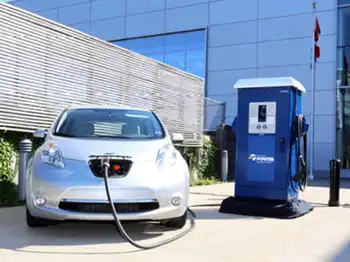
US Electric Vehicle Momentum Slows as Globe Surges
Substation Relay Protection Training
Our customized live online or in‑person group training can be delivered to your staff at your location.
- Live Online
- 12 hours Instructor-led
- Group Training Available
US electric vehicle momentum is slowing as tax credits expire, tariffs increase costs, and interest rates rise, while Europe and China accelerate EV adoption through stronger incentives, enhanced charging infrastructure, and growth in battery manufacturing.
Why has US Electric Vehicle Momentum Slowed as Globe Surges?
US electric vehicle momentum has slowed due to expiring subsidies, rising costs, and global competition from faster-moving markets.
? End of federal tax credits weakened buyer demand
? Tariffs and high interest rates raised EV prices
? Europe and China expanded incentives and infrastructure
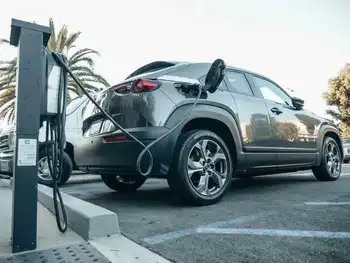
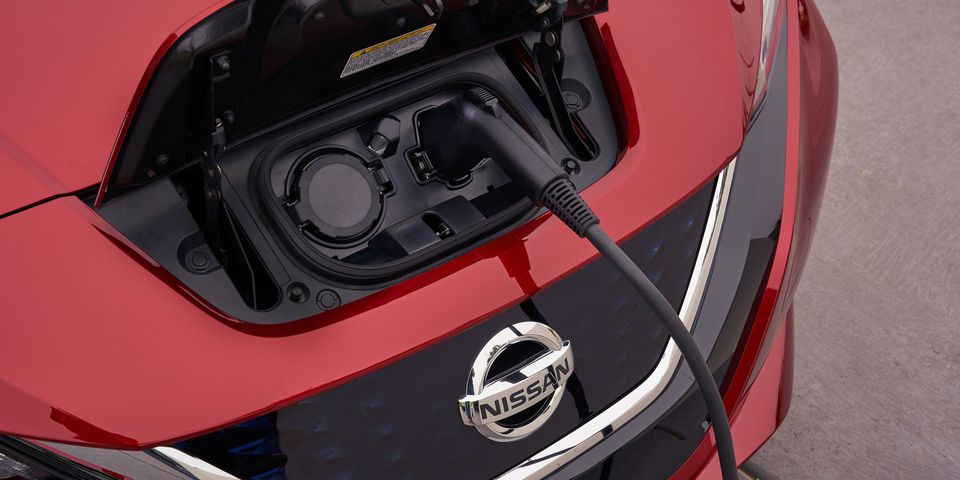
You could be forgiven for thinking that electric cars might finally be gaining momentum in the United States. Last year, battery-powered vehicle sales topped 1.2 million—more than five times the number sold just four years earlier, amid an early-2024 EV surge in deliveries. Hybrid sales tripled over the same period, and in August, battery cars accounted for 10 percent of all new vehicle sales, a record high according to S&P Global Mobility.
Major automakers, including General Motors, Ford, and Tesla, reported record electric-vehicle deliveries this quarter, a rare bright spot in an industry still contending with high interest rates, inflation, and tariffs, and a sign the age of electric cars is arriving.
Yet analysts warn the apparent boom may be short-lived, noting a market share dip in early 2024 that could foreshadow slower growth. Much of the recent surge was driven by buyers rushing to take advantage of a federal subsidy worth up to $7,500 per vehicle—a credit that expired at the end of September. Without it, automakers expect demand to dip sharply.
"It's going to be a vibrant industry, but it's going to be smaller, way smaller than we thought," Ford CEO Jim Farley said Tuesday. General Motors’ CFO Paul Jacobson echoed that concern: "I expect that EV demand is going to drop off pretty precipitously," he told a conference last month.
Even with those gains, the US—still the world’s second-largest car market—remains a laggard compared with global peers, where global EV adoption has accelerated rapidly. Electric and hybrid vehicles accounted for nearly 30 percent of new sales in the UK last year and approximately one in five across Europe. In China, electric models accounted for almost half of all car sales in 2023 and are expected to become the majority this year, according to the International Energy Agency.
Analysts say policy differences largely explain the gap. Other regions have offered stronger incentives, stricter emissions rules, and more aggressive trade-in programs. President Joe Biden tried to close the gap, tightening emissions standards, offering loans for EV investments, and spending billions on charging networks while expanding the $7,500 credit. His goal was to have half of all US vehicle sales be electric by 2030.
Supporters argue that such measures are crucial to keeping American carmakers competitive with Chinese and European manufacturers. But former President Donald Trump, who recently dismissed climate change as a "con job," has vowed to roll back many of those initiatives, echoing arguments that the EV revolution is overstated by proponents. "We're saying ... you're not going to be forced to make all of those cars," Trump said this summer, while signing a bill to strike down California’s plan to phase out gasoline-only car sales by 2035. "You can make them, but it'll be by the market, judged by the market."
Although EVs have become cheaper, they still cost more than comparable gasoline models, and sales remain behind gas cars in most segments. The average US electric car sold for approximately $57,000 in August, which is roughly 16 percent higher than the overall average, according to Kelley Blue Book.
Chinese EV giants such as BYD have been blocked from the US market by tariffs supported by both Biden and Trump, further limiting price competition. Automakers now face the twin challenges of rising tariffs and disappearing subsidies.
"It would have been difficult enough if all you had to deal with were new tariffs, but with new tariffs and the incentive going away, there are two impacts," said Stephanie Brinley of S&P Global Mobility.
Researchers warn that the policy shift could further reduce EV investment. "It's a big hit to the EV industry—there's no tiptoeing around it," said Katherine Yusko of the American Security Project. "The subsidies were initially a way to level the playing field, and now that they're gone, the US has a lot of ground to make up."
Still, Brinley urged caution before declaring the race lost, even as some argue EVs have hit an inflection point in adoption. "Is [electric] really the right thing?" she asked. "Saying that we're behind assumes that this is the only and best solution, and I think it's a little early to say that."
Related Articles