Nova Scotia EV Charging Infrastructure Faces Urgent Upgrade Needs
CSA Z462 Arc Flash Training – Electrical Safety Compliance Course
Our customized live online or in‑person group training can be delivered to your staff at your location.

- Live Online
- 6 hours Instructor-led
- Group Training Available
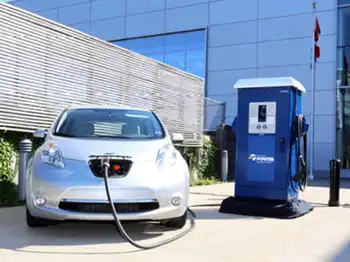
Nova Scotia EV charging infrastructure remains limited, with only 14 fast chargers across the province. As electric vehicle adoption grows, urgent upgrades are needed to support long-distance travel and public charging convenience.
What's Going On
Nova Scotia EV charging infrastructure refers to the province’s public and private network of stations that power electric vehicles (EVs).
Only 14 public DC fast chargers operational across Nova Scotia today.
$1.1M federal funding backs Nova Scotia Power utility-managed smart charging.
Pilot enrolls up to 200 EVs to test V2G and demand management strategies.
Data will inform policies to scale fast charging and renewable grid integration.
Nova Scotia’s EV charging network is struggling to keep pace with a growing fleet of electric vehicles. As of today, only 14 public DC fast chargers are operational across the province, a significant shortfall for drivers navigating long distances. This creates not only logistical hurdles but also growing consumer hesitation — particularly as EV sales continue to surge across Canada.
In response, the Canadian government has announced a $1.1 million (US$0.88 million) investment into a new smart-charging pilot program. Led by Nova Scotia Power, this initiative will explore how electric vehicles can better integrate with the local grid using a centralized, utility-managed control system. Up to 200 participants are expected to join the program, which aims to test both smart charging and vehicle-to-grid (V2G) technologies.
These systems allow EVs to act as distributed energy storage, helping to manage electricity demand and improve renewable energy integration — a strategy already being tested in other jurisdictions. For example, Ontario’s charging network expansion has provided a model for scaling fast-charging accessibility. Similarly, British Columbia has recently accelerated its rollout of faster charging stations to support mass EV adoption.
The Nova Scotia pilot will assess local EV charging behaviors, including drivers’ willingness to participate in V2G services based on incentives, driving patterns, and access to clean power. “We know customers want clean, affordable, reliable energy for their homes and businesses,” says Dave Landrigan, VP Commercial at Nova Scotia Power. “Through our electric vehicle smart charging pilot, we will test these technologies to learn how they can benefit all customers, creating clean, smarter options without changing a person’s driving habits.”
The funding comes through Natural Resources Canada’s Electric Vehicle Infrastructure Demonstration program, which supports the development of cutting-edge charging and hydrogen refueling solutions across the country. To date, the federal government has invested over $600 million to support EV affordability and infrastructure deployment, with a particular focus on a coast-to-coast fast-charging network.
At the same time, other provinces are stepping up their leadership roles. In Québec, Hydro-Québec is expanding its EV ecosystem through a strategic partnership with Propulsion Québec, a key industry cluster for sustainable mobility. Their focus includes reliable public charging, clean grid integration, and stakeholder collaboration — all essential factors for scalable transportation electrification.
“In Québec, we are fortunate to be able to make transportation electrification possible by easily replacing gas imported from outside with our clean energy,” said France Lampron, Director – Transportation Electrification at Hydro-Québec. “To do this, we need to develop synergies between various stakeholders in the sustainable mobility sector.”
While Nova Scotia’s current fast-charging availability is limited, the province now has an opportunity to follow a similar trajectory. With funding in place, stakeholder alignment, and public interest growing, the expansion of Nova Scotia EV charging infrastructure could soon match the pace of rising EV demand. As governments and utilities nationwide focus on electrification, Nova Scotia’s pilot may lay the groundwork for a more connected, cleaner transportation future.
Related News