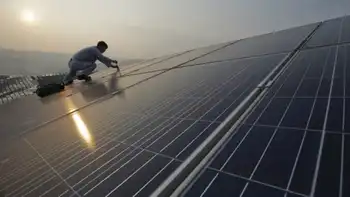
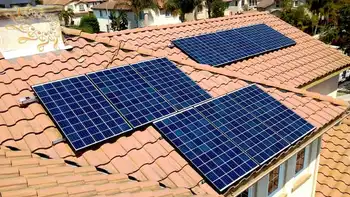
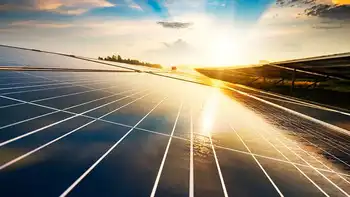
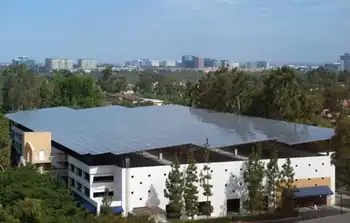
Solar generation was 3% of U.S. electricity in 2020, but we project it will be 20% by 2050
Protective Relay Training - Basic
Our customized live online or in‑person group training can be delivered to your staff at your location.
- Live Online
- 12 hours Instructor-led
- Group Training Available
U.S. Solar Generation Forecast highlights rising photovoltaics, utility-scale and small-scale growth across residential, commercial, and industrial sectors, shaped by Investment Tax Credit policy and EIA Short-Term and Annual Energy Outlook projections.
Main Details
An estimate of U.S. solar generation shares, spanning PV and solar thermal across utility-scale and small-scale sources.
2020: 3% of U.S. electricity; 2021: 4%; 2022: 5% (STEO).
Reference: 14% by 2035, 20% by 2050 (AEO2021).
Utility-scale share grows to 78% by 2050; ITC supports builds.
According to our Electric Power Annual, solar power accounted for 3% of U.S. electricity generation from all sources in 2020, as renewables became the second-most prevalent source that year overall. In our Short-Term Energy Outlook, we forecast that solar will account for 4% of U.S. electricity generation in 2021 and 5% in 2022, though 4.7% share in 2022 was reported by independent sources. In our Annual Energy Outlook 2021 (AEO2021) Reference case, which assumes no change in current laws and regulations, we project that solar generation will make up 14% of the U.S. total in 2035 and 20% in 2050. These data include electricity generated from both utility-scale (those of 1 megawatt or more generating capacity) and small-scale (less than 1 megawatt) solar facilities in the electric power, residential, commercial, and industrial sectors.
Humans have been using solar energy for centuries and first produced solar-powered electricity in the United States in 1954. Currently, solar energy can generate electricity in two ways: solar photovoltaics (PV) and solar thermal, and has become the third-largest renewable source in the United States. Solar PV cells, such as rooftop solar panels, directly convert sunlight into electricity. Solar thermal facilities use mirrors to concentrate sunlight at a central receptor and produce the high temperatures needed to generate electricity with a steam-powered turbine.
Increases in small-scale solar, particularly in the commercial and residential sectors, drove much of the early growth in U.S. solar electricity net generation, while 82% of the 2023 utility-scale pipeline is now wind, solar, and batteries nationwide. In 2011, small-scale solar accounted for 68% of total U.S. solar electricity net generation. However, utility-scale solar generation increased substantially in the United States during the past decade as average construction costs for solar power plants fell.
In our long-term projections, the electric power sector continues to produce the most solar generation, increasing from 68% of total solar generation in 2020 to 78% in 2050. The growing share of utility-scale generation is due in part to the availability of a 10% Investment Tax Credit (ITC) after 2023, and policy proposals such as tenfold expansion of solar have been discussed; in contrast, the ITC for small-scale solar has expired.
The AEO2021’s projected share of solar generation is affected by assumptions about the installed and operating costs of other generating technologies, particularly in later years of the projection period when the projected trends in solar are increasingly influenced by economic factors rather than policy, and 30% from wind and solar is seen as attainable under broader market trends. In a sensitivity case in which natural gas prices are higher than in the Reference case (the Low Oil and Gas Supply case), solar generation reaches 25% of total generation by 2050, compared with 20% in the Reference case, while one-fourth of U.S. electricity is projected for renewables. In another sensitivity case in which installed costs of renewables are lower than in the Reference case (the Low Renewables Costs case), solar generation makes up 27% of total generation by 2050.