Nearly $1 Trillion in Investments Estimated by 2030 as Power Sector Transitions to a More Decarbonized and Flexible System
Electrical Testing & Commissioning of Power Systems
Our customized live online or in‑person group training can be delivered to your staff at your location.
- Live Online
- 12 hours Instructor-led
- Group Training Available
Distributed Energy Resources (DER) are surging as solar PV, battery storage, and demand response decarbonize power, cut costs, and boost grid resilience for utilities, ESCOs, and C&I customers through 2030.
Breaking Down the Details
DER are small-scale, grid-connected assets like solar PV, storage, and demand response that deliver flexible power.
Annual DER investment to rise 75% by 2030 amid favorable regulations.
Decade spend: $846B in DER plus $285B in storage; solar to lead.
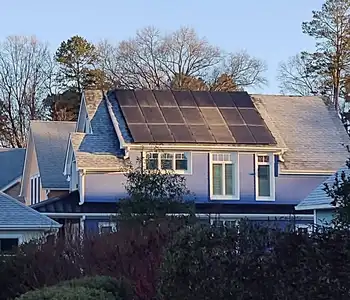
Residential PV: 49.3% of investment ($419B); C&I PV: 38.9% ($330B).
COVID-19 dips near term; recovery expected as installations accelerate.
Frost & Sullivan's recent analysis, Growth Opportunities in Distributed Energy, Forecast to 2030, finds that the rate of annual investment in distributed energy resources (DER) will increase by 75% by 2030, with the market set for a decade of high growth. Favorable regulations, declining project and technology costs, and high electricity and demand charges are key factors driving investments in DER across the globe, with rising European demand boosting US solar equipment makers prospects in export markets. The COVID-19 pandemic will reduce investment levels in the short term, but the market will recover. Throughout the decade, $846 billion will be invested in DER, supported by a further $285 billion that will be invested in battery storage, with record solar and storage growth anticipated as installations and investments accelerate.
"The DER business model will play an increasingly pivotal role in the global power mix, as highlighted by BNEF's 2050 outlook and as part of a wider effort to decarbonize the sector," said Maria Benintende, Senior Energy Analyst at Frost & Sullivan. "Additionally, solar photovoltaic (PV) will dominate throughout the decade. Residential solar PV will account for 49.3% of total investment ($419 billion), though policy moves like a potential Solar ITC extension could pressure the US wind market, with commercial and industrial solar PV accounting for a further 38.9% ($330 billion)."
Benintende added: "In developing economies, DER offers a chance to bridge the electricity supply gap that still exists in a number of country markets. Further, in developed markets, DER is a key part of the transition to a cleaner and more resilient energy system, consistent with IRENA's renewables decarbonization findings across the energy sector."
DER offers significant revenue growth prospects for all key market participants, including:
- Technology original equipment manufacturers (OEMs): Offer flexible after-sales support, including digital solutions such as asset integrity and optimization services for their installed base.
- System integrators and installers: Target household customers and provide efficient and trustworthy solutions with flexible financial models.
- Energy service companies (ESCOs): ESCOs should focus on adding DER deployments, in line with US decarbonization pathways and policy goals, to expand and enhance their traditional role of providing energy savings and demand-side management services to customers.
Utility companies: Deployment of DER can create new revenue streams for utility companies, from real-time and flexibility markets, and rapid solar PV growth in China illustrates how momentum in renewables can shape utility strategies.
Growth Opportunities in Distributed Energy, Forecast to 2030 is the latest addition to Frost & Sullivan's Energy and Environment research and analyses available through the Frost & Sullivan Leadership Council, which helps organizations identify a continuous flow of growth opportunities to succeed in an unpredictable future.