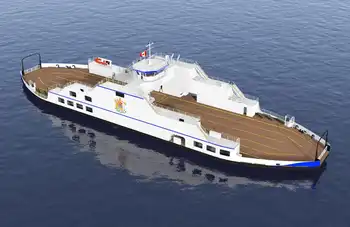
Electric-ready ferry for Kootenay Lake to begin operations in 2023
Protective Relay Training - Basic
Our customized live online or in‑person group training can be delivered to your staff at your location.
- Live Online
- 12 hours Instructor-led
- Group Training Available
Kootenay Lake Electric-Ready Ferry advances clean technology in BC, debuting as a hybrid diesel-electric vessel with shore power conversion planned, capacity and terminal upgrades to cut emissions, reduce wait times, and modernize inland ferry service.
What's Behind the News
Hybrid diesel-electric ferry replacing MV Balfour, boosting capacity, and aiming for full electric conversion by 2030.
Doubles vehicle capacity; runs with MV Osprey 2000 in summer
Hybrid-ready systems installed; shore power to enable full electric
Terminal upgrades at Balfour and Kootenay Bay improve reliability
An electric-ready ferry for Kootenay Lake is scheduled to begin operations in 2023, aligning with first electric passenger flights planned by Harbour Air, the province announced in a Sept. 3 press release.
Construction of the $62.9-million project will begin later this year, which will be carried out by Western Pacific Marine Ltd., reflecting broader CIB-supported ferry investments in B.C. underway.
“With construction beginning here in Canada on the new electric-ready ferry for Kootenay Lake, we are building toward a greener future with made-in-Canada clean technology,” said Catherine McKenna, the federal minister of infrastructure and communities.
The new ferry — which is designed to provide passengers with a cleaner vessel informed by advances in electric ships and more accessibility — will replace and more than double the capacity of the MV Balfour, which will be retired from service.
“This is an exciting milestone for a project that will significantly benefit the Kootenay region as a whole,” said Michelle Mungall, MLA for Nelson-Creston. “The new, cleaner ferry will move more people more efficiently, improving community connections and local economies.”
Up to 55 vehicles can be accommodated on the new ship, and will run in tandem with the larger MV Osprey 2000 to help reduce wait times, a strategy also seen with Washington State Ferries hybrid-electric upgrades, during the summer months.
“The vessel will be fully converted to electric propulsion by 2030, once shore power is installed and reliability of the technology advances for use on a daily basis, as demonstrated by Harbour Air's electric aircraft testing on B.C.'s coast,” said the province.
They noted that they are working to electrify their inland ferry fleet by 2040, as part of their CleanBC initiative.
“The new vessel will be configured as a hybrid diesel-electric with all the systems, equipment and components for electric propulsion,” they said.
Other planned projects include upgrades to the Balfour and Kootenay Bay terminals, and minor dredging has been completed in the West Arm.