How to Calculate Power Factor: Step-by-Step
By R.W. Hurst, Editor
Power Quality Training - Harmonic Analysis, Diagnostics, Mitigation
Our customized live online or in‑person group training can be delivered to your staff at your location.
- Live Online
- 12 hours Instructor-led
- Group Training Available
Download Our OSHA 4475 Fact Sheet – Being Aware of Arc Flash Hazards
- Identify root causes of arc flash incidents and contributing conditions
- Apply prevention strategies including LOTO, PPE, and testing protocols
- Understand OSHA requirements for training and equipment maintenance
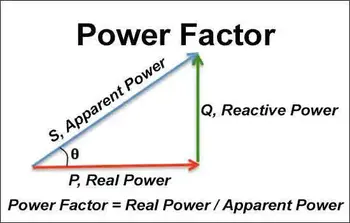
Power factor is calculated by dividing real power (in kilowatts) by apparent power (in kVA). This simple ratio helps identify reactive load issues, improve energy efficiency, and manage system performance more effectively.
How to calculate power factor?
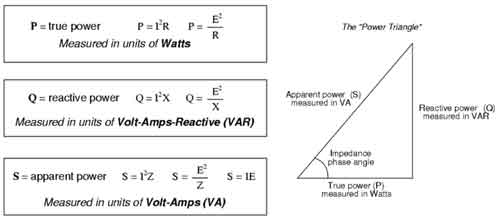
You can find the power factor by comparing the amount of useful energy that performs useful work with the total energy supplied to the electrical circuit. Real power (P) represents the portion doing the work, while apparent power (S) includes both usable energy and the extra reactive component that circulates in inductive and capacitive loads. The ratio between these two values immediately reveals how efficiently a system is operating.
In daily practice, this ratio influences more than billing. It affects transformer loading, conductor sizing, equipment life, and the headroom available for expansion. Inductive devices such as motors, ballasts, and some lighting systems naturally draw reactive power (Q), which can quietly reduce system capacity if it is not monitored and managed.
A solid grasp of how to calculate power factor enables technicians and facility personnel to detect small inefficiencies before they escalate into overheating, nuisance trips, or utility penalties. It also supports informed decisions about corrective equipment and load scheduling.
In AC circuits, understanding the different types of power is essential, as electrical systems rarely operate at perfect efficiency. The ratio of real power to apparent power is central to evaluating performance, and the power factor formula helps explain why a circuit's power factor may show losses even when voltage is measured in volts. Active power represents the useful work being done, while a lagging power factor is common in inductive loads, where current lags behind voltage. By comparing P to apparent values, technicians gain a clearer picture of system behavior and how to correct inefficiencies.
Electricity Today T&D Magazine Subscribe for FREE

- Timely insights from industry experts
- Practical solutions T&D engineers
- Free access to every issue
Power Quality Analysis Training
Request a Free Power Quality Training Quotation
Understanding Power Factor and Efficiency
Knowing how to calculate PF gives you a clear picture of system efficiency. Although the formula is straightforward, it reflects the balance between real work and the reactive support load that keeps voltage and current aligned in AC systems. The calculation becomes more meaningful when viewed as a way to understand how much of your electrical investment produces actual work.
The Basic Formula
The standard formula for PF is:
PF = Real Power (kW) ÷ Apparent Power (kVA)
Real power (P) is the portion used for lighting, heating, mechanical output, or other work. S measures the total power delivered. When these two values differ significantly, the system exhibits excess reactivity, reducing efficiency.
Step-by-Step Guide
-
Measure P (kW):
A wattmeter or multifunction analyzer provides the most accurate value for the real work being done.Measure S (kVA):
Determine voltage and current, then calculate kVA using:S (kVA) = (Voltage × Current) ÷ 1000
For three-phase circuits, include √3 in the calculation:
S (kVA) = (Voltage × Current × √3) ÷ 1000
Apply the PF Formula:
Divide the measured P by the calculated S to find PF.
Practical Example
Assume your system readings show:
Real Power = 300 kW
Voltage = 400 V
Current = 500 A
Start with S for a three-phase circuit:
S = (400 × 500 × √3) ÷ 1000
S ≈ 346 kVA
Now calculate the power factor:
PF = 300 ÷ 346 ≈ 0.87
This result indicates that the system is operating at roughly 87 percent efficiency in using the supplied power. A value above 1 is never possible, so out-of-range results often signal a measurement or calculation error.
Need a faster way? Use our Power Factor Calculator to automate the calculation.
Why It Matters
Accurate PF calculations help facilities understand where energy is being used efficiently and where it is being wasted. Poor PF values lead to higher losses, reduced capacity, overheated equipment, and potential utility penalties. Recognizing the issue early allows for targeted solutions such as capacitor banks, improved load management, or automatic correction equipment. Learn about techniques in Power Factor Correction.


Additional Tips
Additional Tips
- Measure during peak demand to get a realistic picture of system behaviour.
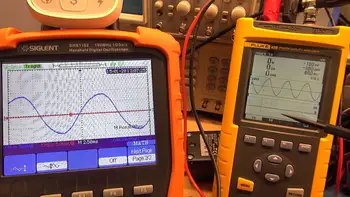
- Use reliable test instruments such as clamp meters or digital analyzers.
- If PF drops below 0.9, explore improvements such as capacitor banks or Automatic Power Factor Controllers.
For further reading on What is Power Factor? or how Capacitors Help Improve Efficiency, see our detailed guides.
Related Articles