Germany shuts down its last three nuclear power plants
Substation Relay Protection Training
Our customized live online or in‑person group training can be delivered to your staff at your location.
- Live Online
- 12 hours Instructor-led
- Group Training Available
Germany Nuclear Phase-Out ends power generation from reactors, prioritizing energy security, renewables, and emissions goals amid the Ukraine war, natural gas shortages, decommissioning plans, and climate change debates across Europe and the national power grid.
The Big Picture
Germany Nuclear Phase-Out ends reactors, shifting to renewables to balance energy security, emissions, climate goals.
Final shutdown of Emsland, Isar II, Neckarwestheim II.
Phaseout reaffirmed despite 2022 short extension.
Debate: low-carbon supply vs. safety and gas crisis impacts.
Nuclear supply chain continues in fuel fabrication and decommissioning.
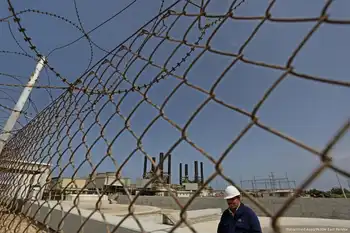
Germany is no longer producing any electricity from nuclear power plants, a move widely seen as turning its back on nuclear for good.
Closures of the Emsland, Isar II, and Neckarwestheim II nuclear plants in Germany were expected. The country announced plans to phase out nuclear power in 2011. However, in the fall of 2022, with the Ukraine war constraining access to energy, especially in Europe, Germany decided to extend nuclear power operations for an additional few months to bolster supplies.
“This was a highly anticipated action. The German government extended the lifetimes of these plants for a few months but never planned beyond that,” David Victor, a professor of innovation and public policy at UC San Diego, said.
Responses to the closures ranged from aghast that Germany would shut down a clean source of energy production, especially as Europe is losing nuclear power just when it really needs energy. In contrast, the global response to anthropogenic climate change continues to be insufficient to celebratory that the country will avoid any nuclear accidents like those that have happened in other parts of the world.
A collection of esteemed scientists, including two Nobel laureates and professors from MIT and Columbia, made a last-minute plea in an open letter published on April 14 on the nuclear advocacy group’s website, RePlaneteers, to keep the reactors operating, reviving questions about a resurgence of nuclear energy in Germany today.
“Given the threat that climate change poses to life on our planet and the obvious energy crisis in which Germany and Europe find themselves due to the unavailability of Russian natural gas, we call on you to continue operating the last remaining German nuclear power plants,” the letter states.
The open letter states that the Emsland, Isar II, and Neckarwestheim II facilities provided more than 10 million German households with electricity, even as some officials argued that nuclear would do little to solve the gas issue then. That’s a quarter of the population.
“This is hugely disappointing, when a secure low carbon 24/7 source of energy such as nuclear was available and could have continued operation for another 40 years,” Henry Preston, spokesperson for the World Nuclear Association. “Germany’s nuclear industry has been world-class. All three reactors shut down at the weekend performed extremely well.”
Despite the shutdown, some segments of nuclear industrial processes will continue to operate. “Germany’s nuclear sector will continue to be first class in the wider nuclear supply chain in areas such as fuel fabrication and decommissioning,” Preston said.
While the open letter did not succeed in keeping the nuclear reactors open, it does underscore a crucial reason why nuclear power has been part of global energy conversations recently, with some arguing it is a needed option for climate policy after a generational lull in the construction of nuclear power plants: climate change.
Generating electricity with nuclear reactors does not create any greenhouse gases. And as global climate change response efforts continue to fall short of emission targets, atomic energy is getting renewed consideration, and Germany has even considered a U-turn on its phaseout amid renewed debate.