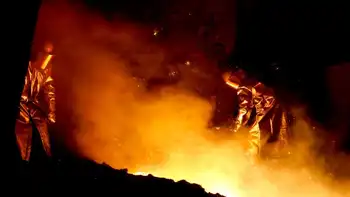
German steel powerhouse turns to 'green' hydrogen produced using huge wind turbines
NFPA 70b Training - Electrical Maintenance
Our customized live online or in‑person group training can be delivered to your staff at your location.
- Live Online
- 12 hours Instructor-led
- Group Training Available
Green Hydrogen for Steelmaking enables decarbonization in Germany by powering electrolyzers with wind turbines at Salzgitter. Partners Vestas, Avacon, and Linde support renewable hydrogen for iron ore reduction, cutting CO2 in heavy industry.
What This Means
Hydrogen from renewable-powered electrolysis replacing coal in iron ore reduction, cutting CO2 emissions from steelmaking
30 MW Vestas wind farm powers 2x1.25 MW electrolyzers.
Salzgitter, Avacon, Linde link sectors to replace fossil fuels.
Targets CO2 cuts in iron ore reduction and steel smelting.
A major green hydrogen facility in Germany has started operations, with those behind the project hoping it will help to decarbonize the energy-intensive steel industry in the years ahead.
The "WindH2" project involves German steel giant Salzgitter, E.ON subsidiary Avacon and Linde, a firm specializing in engineering and industrial gases, and aligns with calls for hydrogen-ready power plants in Germany today.
Hydrogen can be produced in a number of ways. One method includes using electrolysis, with an electric current splitting water into oxygen and hydrogen, and advances in PEM hydrogen technology continue to improve efficiency worldwide.
If the electricity used in the process comes from a renewable source such as wind or solar, as underscored by recent German renewables gains, then it's termed "green" or "renewable" hydrogen.
The development in Germany is centered around seven new wind turbines operated by Avacon and two 1.25 megawatt (MW) electrolyzer units installed by Salzgitter Flachstahl, which is part of the wider Salzgitter Group. The facilities were presented to the public this week.
The turbines, from Vestas, have a hub height of 169 meters and a combined capacity of 30 MW. All are located on premises of the Salzgitter Group, with three situated on the site of a steel mill in the city of Salzgitter, Lower Saxony, northwest Germany, where grid expansion woes can affect project timelines.
The hydrogen produced using renewables will be utilized in processes connected to the smelting of iron ore. Total costs for the project come to roughly 50 million euros (around $59.67 million), with the building of the electrolyzers subsidized by state-owned KfW, while a national net-zero roadmap could reduce electricity costs over time.
"Green gases have the wherewithal to become 'staple foodstuff' for the transition to alternative energies and make a considerable contribution to decarbonizing industry, mobility and heat," E.ON's CEO, Johannes Teyssen, said in a statement issued Thursday.
"The jointly realized project symbolizes a milestone on the path to virtually CO2 free production and demonstrates that fossil fuels can be replaced by intelligent cross-sector linking," he added.
According to the International Energy Agency, the iron and steel sector is responsible for 2.6 gigatonnes of direct carbon dioxide emissions each year, a figure that, in 2019, was greater than the direct emissions from sectors such as cement and chemicals.
It adds that the steel sector is "the largest industrial consumer of coal, which provides around 75% of its energy demand."
The project in Germany is not unique in focusing on the role green hydrogen could play in steel manufacturing.
Across Europe, projects are also exploring natural gas pipe storage to balance intermittent renewables and enable sector coupling.
H2 Green Steel, a Swedish firm backed by investors including Spotify founder Daniel Ek, plans to build a steel production facility in the north of the country that will be powered by what it describes as "the world's largest green hydrogen plant."
In an announcement last month the company said steel production would start in 2024 and be based in Sweden's Norrbotten region.
Other energy-intensive industries are also looking into the potential of green hydrogen, and examples such as Schott's green power shift show parallel decarbonization. A subsidiary of multinational building materials firm HeidelbergCement has, for example, worked with researchers from Swansea University to install and operate a green hydrogen demonstration unit at a site in the U.K.