The nuclear power dispute driving a wedge between France and Germany
High Voltage Maintenance Training Online
Our customized live online or in‑person group training can be delivered to your staff at your location.
- Live Online
- 12 hours Instructor-led
- Group Training Available
Franco-German Nuclear Power Divide shapes EU energy policy, electricity market reform, and decarbonization strategies, as Paris backs reactors and state subsidies while Berlin prioritizes renewables, hydrogen, and energy security after Russian gas shocks.
The Big Picture
A policy rift over nuclear shaping EU market reform, subsidies, and the balance between reactors and renewables.
Fessenheim's reuse plan sparks cross-border objections.
France seeks nuclear in EU emissions targets and subsidies.
Germany fears nuclear focus slows renewable expansion.
Rift stalls EU power market reform, hydrogen and renewables rules.
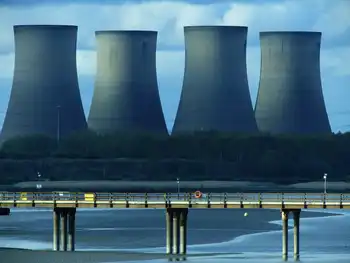
Near the French village of Fessenheim, facing Germany across the Rhine, a nuclear power station stands dormant. The German protesters that once demanded the site’s closure have decamped, in a sign of Europe's nuclear decline, and the last watts were produced three years ago.
But disagreements over how the plant from 1977 should be repurposed persist, speaking to a much deeper divide over nuclear power, which Eon chief's warning to Germany underscored, between the two countries on either side of the river’s banks.
German officials have disputed a proposal to turn it into a centre to treat metals exposed to low levels of radioactivity, Fessenheim’s mayor Claude Brender says. “They are not on board with anything that might in some way make the nuclear industry more acceptable,” he adds.
France and Germany’s split over nuclear power is a tale of diverging mindsets fashioned over decades, including since the Chernobyl disaster in USSR-era Ukraine. But it has now become a major faultline in a touchy relationship between Europe’s two biggest economies.
Their stand-off over how to treat nuclear in a series of EU reforms has consequences for how Europe plans to advance towards cleaner energy. It will also affect how the bloc secures power supplies as the region weans itself off Russian gas, even though nuclear would do little for the gas issue, and how it provides its industry with affordable energy to compete with the US and China.
“There can be squabbles between partners. But we’re not in a retirement home today squabbling over trivial matters. Europe is in a serious situation,” says Eric-André Martin, a specialist in Franco-German relations at French think-tank IFRI.
France, which produces two-thirds of its power from nuclear plants and has plans for more reactors, is fighting for the low-carbon technology to be factored into its targets for reducing emissions and for leeway to use state subsidies to fund the sector.
For Germany, which closed its last nuclear plants this year and, having turned its back on nuclear, has been particularly shaken by its former reliance on Russian gas, there’s concern that a nuclear drive will detract from renewable energy advances.
But there is also an economic subtext in a region still reeling from an energy crisis last year, reviving arguments for a needed nuclear option for climate in Germany, when prices spiked and laid bare how vulnerable households and manufacturers could become.
Berlin is wary that Paris would benefit more than its neighbours if it ends up being able to guarantee low power prices from its large nuclear output as a result of new EU rules on electricity markets, amid talk of a possible U-turn on the phaseout, people close to talks between the two countries say.
Ministers on both sides have acknowledged there is a problem. “The conflict is painful. It’s painful for the two governments as well as for our [EU] partners,” Sven Giegold, state secretary at the German economy and climate action ministry, where debates about whether a nuclear resurgence is possible persist, tells the Financial Times.
Agnès Pannier-Runacher, France’s energy minister, says she wants to “get out of the realm of the emotional and move past the considerable misunderstandings that have accumulated in this discussion”.
In a joint appearance in Hamburg last week, German chancellor Olaf Scholz and French president Emmanuel Macron made encouraging noises over their ability to break the latest deadlock: a disagreement over the design of the EU’s electricity market. Ministers had been due to agree a plan in June but will now meet on October 17 to discuss the reform, aimed at stabilising long-term prices.
But the French and German impasse on nuclear has already slowed down debates on key EU policies such as rules on renewable energy and how hydrogen should be produced. Smaller member states are becoming impatient. The delay on the market design is “a big Franco-German show of incompetence again”, says an energy ministry official from another EU country who requested anonymity.