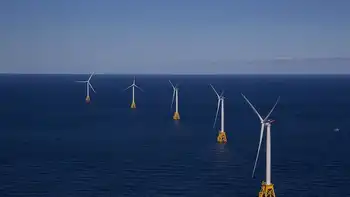
N.S. approves new attempt to harness Bay of Fundy's powerful tides

CSA Z463 Electrical Maintenance -
Our customized live online or in‑person group training can be delivered to your staff at your location.

- Live Online
- 6 hours Instructor-led
- Group Training Available
Bay of Fundy Tidal Energy advances as Nova Scotia permits Jupiter Hydro to test floating barge platforms with helical turbines in Minas Passage, supporting renewable power, grid-ready pilots, and green jobs in rural communities.
A Closer Look
A Nova Scotia tidal energy project using helical turbines to generate clean power and create local jobs.
Nova Scotia issued two tidal energy permits to Jupiter Hydro.
Three floating barges with helical turbines for Minas Passage trials.
1 MW prototype off grid; 5-year permit up to 2 MW with standards.
PPA authorized at 50 cents/kWh via Nova Scotia Power intertie.
Study: by 2040, up to $1.7B GDP and 22,000 jobs from tidal sector.
An Alberta-based company has been granted permission to try to harness electricity from the powerful tides of the Bay of Fundy.
Nova Scotia has issued two renewable energy permits to Jupiter Hydro.
Backers have long touted the massive energy potential of Fundy's tides -- they are among the world's most powerful -- but large-scale commercial efforts to harness them have borne little fruit so far, even as a Scottish tidal project recently generated enough power to supply nearly 4,000 homes elsewhere.
The Jupiter application says it will use three "floating barge type platforms" carrying its patented technology. The company says it uses helical turbines mounted as if they were outboard motors.
"Having another company test their technology in the Bay of Fundy shows that this early-stage industry continues to grow and create green jobs in our rural communities," Energy and Mines Minister Derek Mombourquette said in a statement.
The first permit allows the company to test a one-megawatt prototype that is not connected to the electricity grid.
The second -- a five-year permit for up to two megawatts -- is renewable if the company meets performance standards, environmental requirements and community engagement conditions.
Mombourquette also authorized a power purchase agreement that allows the company to sell the electricity it generates to the Nova Scotia grid through Nova Scotia Power for 50 cents per kilowatt hour.
On its web site, Jupiter says it believes its approach "will prove to be the most cost effective marine energy conversion technology in the world," even as other regional utilities consider initiatives like NB Power's Belledune concept for turning seawater into electricity.
The one megawatt unit would have screws which are about 5.5 metres in diameter.
The project is required to obtain all other necessary approvals, permits and authorizations.
It will be located near the Fundy Ocean Research Center for Energy in the Minas Passage and will use existing electricity grid connections.
A study commissioned by the Offshore Energy Research Association of Nova Scotia says by 2040, the tidal energy industry could contribute up to $1.7 billion to Nova Scotia's gross domestic product and create up to 22,000 full-time jobs, a transition that some argue should be planned by an independent body to ensure reliability.
Last month, Nova Scotia Power said it now generates 30 per cent of its power from renewables, as the province moves to increase wind and solar projects after abandoning the Atlantic Loop.
The utility says 18 per cent came from wind turbines, nine per cent from hydroelectric and tidal turbines and three per cent by burning biomass across its fleet.
However, over half of the province's electrical generation still comes from the burning of coal or petroleum coke, even as environmental advocates push to reduce biomass use in the mix. Another 13 per cent come from burning natural gas and five per cent from imports.