Report: Duke Energy to release climate report under investor pressure
Protective Relay Training - Basic
Our customized live online or in‑person group training can be delivered to your staff at your location.

- Live Online
- 12 hours Instructor-led
- Group Training Available
Duke Energy zero-coal 2050 plan outlines a decarbonized energy mix, aligning with Paris goals, cutting greenhouse gas emissions, driven by investor pressure, shifting to natural gas, extending nuclear power, and phasing out coal.
Top Insights
An investor-driven scenario to end coal by 2050, shift to natural gas, extend nuclear plants, and manage climate risk.
Eliminates coal from the generation mix by 2050
Prioritizes natural gas transitions without CCS breakthroughs
Extends nuclear plant licenses to limit carbon emissions
One of America’s largest utility companies, Duke Energy, is set to release a report later this month that sketches a drastically changed electricity mix in a carbon-constrained future.
The big picture: Duke is the latest energy company to commit to releasing a report about climate change in response to investor pressure, echoing shifts such as Europe's oil majors going electric across the sector, conveyed by non-binding but symbolically important shareholder resolutions. Duke provides electricity to more than seven million customers in the Carolinas, the Midwest and Florida.
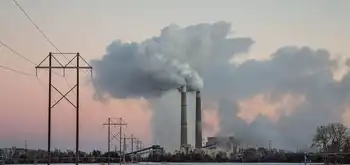
Gritty details: The report is expected to find that coal, currently 33% of Duke’s mix, gone entirely from its portfolio by 2050 in a future scenario where the world has taken steps to cut greenhouse gas emissions, and where global coal-fired electricity use is falling markedly, to a level consistent with keeping global temperatures from rising two degrees Celsius. That’s the big ambition of the 2015 Paris climate deal, but the current commitments aren’t close to reaching that.
What they're saying: “What’s difficult about this is we are trying to overlay what we understand currently about technology,” Lynn Good, Duke CEO, told Axios in an interview on the sidelines of a major energy conference here.
She went on to say that this scenario of zero coal by 2050 doesn’t assume any breakthroughs in technology that captures carbon emissions from coal-fired power plants. “We don’t see that technology today, and we need to make economic decisions to get those units moving and replacing them with natural gas.”
Good also stressed the benefits of its several nuclear power plants, highlighting the role of sustaining U.S. nuclear power in decarbonization, which emit no carbon emissions. She said Duke isn’t considering investing in new nuclear plants, but plans to seek federal relicensing of current plants.
“If I turn them off, the resource that would replace them today is natural gas, so carbon will go up,” Good said. “Our objective is to continue to keep those plants as long as possible.”
What’s next: A spokesman said the other details of their 2050 scenario estimates will be available when the report is officially released by month’s end.
Axios reports that Duke Energy will release a report later this month that detail the utility's efforts to mitigate climate change risks and plan carbon-free electricity investments across its operations. The report includes a scenario that eliminates coal entirely from the company's power mix by 2050. Coal currently makes up about a third of Duke's generation.
Duke CEO Lynn Good told the news outlet the scenario ending coal-fired generation assumes no technological advances in emissions capture, seemingly leaving open the possibility.
Last year, a report by the Union of Concerned Scientists concluded one in four of the remaining operating coal-fired plants in the U.S. are slated for closure or conversion to natural gas, amid falling power-sector carbon emissions across the country. Duke's report is expected to be released by the end of the month.
Duke's report on its carbon plans comes at the behest of shareholders, a trend utility companies have seen growing among investors who are increasingly concerned about companies' sustainability and their financial exposure to climate policy.
Last year, a majority of shareholders of Pennsylvania utility PPL Corp. called on company management to publish a report on how climate change policies and technological innovations will affect the company's bottom line. Almost 60% of shareholders voted in favor of the non-binding proposal.
The vote, reportedly a first for the power sector, followed a similar decision by shareholders of Occidental Petroleum, which was supported by about 66% of shareholders.
Duke's Good told Axios that right now the utility does not see the coal technology on the horizon that would keep it operating plants. “We don't see that technology today, and we need to make economic decisions to get those units moving and replacing them with natural gas," Good said. However, it does not mean the utility is making near-term efforts to erase coal from its power mix. However, some utilities are taking those steps as they prepare for en energy landscape with more carbon regulations.
In addition to the 25% of coal plants heading for closure or conversion, the UCS report also said that another 17% of the nation’s operating coal plants are uneconomic compared with natural gas-fired generation, and could face retirement soon. But there is plenty of ongoing research into "clean coal" possibilities, and the federal government has expressed an interest in smaller, modular coal units.