Sustaining U.S. Nuclear Power And Decarbonization
Protective Relay Training - Basic
Our customized live online or in‑person group training can be delivered to your staff at your location.
- Live Online
- 12 hours Instructor-led
- Group Training Available
Existing Nuclear Reactor Lifetime Extension sustains carbon-free electricity, supports deep decarbonization, and advances net zero climate goals by preserving the US nuclear fleet, stabilizing the grid, and complementing advanced reactors.
Context and Background
Extending licenses keeps carbon-free nuclear online, stabilizes grid, and accelerates decarbonization toward net zero.
Sustains 20% of US electricity with carbon-free baseload power
Avoids CO2 by delaying retirements of 1970-1990 era reactors
Stabilizes grids and complements variable renewables
License extensions to 80 years and beyond boost decarbonization
Advanced reactors help; lower capital costs amplify climate gains
Nuclear power is the single largest source of carbon-free energy in the United States and currently provides nearly 20 percent of the nation’s electrical demand. As a result, many analyses have investigated the potential of future nuclear energy contributions in addressing climate change and investing in carbon-free electricity across the sector. However, few assess the value of existing nuclear power reactors.
Research led by Pacific Northwest National Laboratory (PNNL) Earth scientist Son H. Kim, with the Joint Global Change Research Institute (JGCRI), a partnership between PNNL and the University of Maryland, has added insight to the scarce literature and is the first to evaluate nuclear energy for meeting deep decarbonization goals amid rising credit risks for nuclear power identified by Moody's. Kim sought to answer the question: How much do our existing nuclear reactors contribute to the mission of meeting the country’s climate goals, both now and if their operating licenses were extended?
As the world races to discover solutions for reaching net zero as part of the global energy transition now underway, Kim’s report quantifies the economic value of bringing the existing nuclear fleet into the year 2100. It outlines its significant contributions to limiting global warming.
Plants slated to close by 2050 could be among the most important players in a challenge requiring all available carbon-free technology solutions—emerging and existing—alongside renewable electricity in many regions, the report finds. New nuclear technology also has a part to play, and its contributions could be boosted by driving down construction costs.
“Even modest reductions in capital costs could bring big climate benefits,” said Kim. “Significant effort has been incorporated into the design of advanced reactors to reduce the use of all materials in general, such as concrete and steel because that directly translates into reduced costs and carbon emissions.”
Nuclear power reactors face an uncertain future, and some utilities face investor pressure to release climate reports as well.
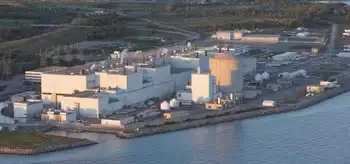
The nuclear power fleet in the United States consists of 93 operating reactors across 28 states. Most of these plants were constructed and deployed between 1970-1990. Half of the fleet has outlived its original operating license lifetime of 40 years. While most reactors have had their licenses renewed for an additional 20 years, and some for another 20, the total number of reactors that will receive a lifetime extension to operate a full 80 years from deployment is uncertain.
Other countries also rely on nuclear energy. In France, for example, nuclear energy provides 70 percent of the country’s power supply. They and other countries must also consider extending the lifetime, retiring, or building new, modern reactors while navigating Canadian climate policy implications for electricity grids. However, the U.S. faces the potential retirement of many reactors in a short period—this could have a far stronger impact than the staggered closures other countries may experience.
“Our existing nuclear power plants are aging, and with their current 60-year lifetimes, nearly all of them will be gone by 2050. It’s ironic. We have a net zero goal to reach by 2050, yet our single largest source of carbon-free electricity is at risk of closure, as seen in New Zealand's electricity transition debates,“ said Kim.