Is 5G a waste of electricity? Experts say it's complicated

Protective Relay Training - Basic
Our customized live online or in‑person group training can be delivered to your staff at your location.
- Live Online
- 12 hours Instructor-led
- Group Training Available
5G Energy Costs highlight base station power consumption, carrier electricity bills, and carbon emissions in China, while advances in energy efficiency, sleep modes, and cooling systems aim to optimize low-latency networks and reduce operational expenses.
Context and Background
5G energy costs rise with power-hungry base stations, yet per-bit efficiency and sleep modes help cut bills.
5G base stations use about 4x the power of 4G sites
Energy per bit is ~4x better than 4G, but underuse wastes power
Carriers idle or shut sites at night to cut OPEX and emissions
Annual electricity spend nears 100 billion yuan across carriers
Efficiency gains: sleep modes, better chips, advanced cooling
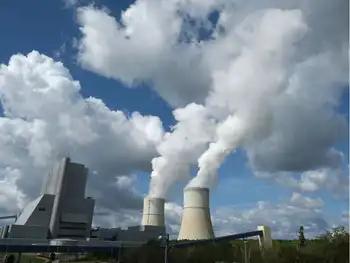
As 5G developers look desperately for a "killer app" to prove the usefulness of the superfast wireless technology, mobile carriers in China are complaining about the high energy cost of 5G signal towers.
And the situation is, according to experts, more complicated than many have thought.
The costly 5G
5G technology can be 10 or more times faster than 4G and significantly more responsive to users' input, but the speed comes at a cost.
A 5G base station consumes "four times more electricity" than its 4G counterpart, said Ding Haiyu, head of wireless and terminals at the China Mobile Research Institute, during a symposium on 5G and carbon neutrality in Beijing, a key focus for countries pursuing a net-zero grid by 2050 worldwide.
But concerning each bit of data transmitted, 5G is four times more energy-efficient than 4G, according to Ding.
This means that mobile carriers should fully occupy their 5G network for as long time as possible, but that can be hard at this moment, as many people are still holding 4G smartphones.
"When the 5G stations are running without people using them, they are really electricity guzzlers," said Zhu Qingfeng, head of power supply design at China Information Technology Designing and Consulting Institute Co., Ltd., who represents China Unicom at the symposium. "Each of the three telecom carrier giants are emitting about ten million tonnes of carbon in the air."
"We have to shut down some 5G base stations at night to reduce emission," he added.
Some utilities are testing fuel cell solutions to keep backup batteries charged much longer, supporting network resilience at lower emissions.
A representative from China Telecom said electricity bills of the nationwide carrier reached a new high of 100 billion yuan (about $15 billion) a year, mirroring the power challenges for utilities as data center demand booms elsewhere.
Getting better
While admitting the excessive cost of 5G, experts at the symposium also agreed that the situation is improving, even as climate pressures on the grid continue to mount.
Ding listed a series of recent technologies that is helping reduce the energy use of 5G, including chips of better process, automatic sleeping and wake-up of base stations and liquid nitrogen-based cooling system, and superconducting cables as part of ongoing upgrades.
"We are aiming at halving the 5G electricity cost to only two times of 4G in two years," Ding said.
Experts also discussed the possibility of making use of 5G's low latency features to help monitoring the electricity grid, thus making the digital grid smarter and more cost effective.
G's energy cost is seen as a hot topic for the incoming World 5G Convention in Beijing in early August, alongside smart grid transformation themes. Stay tuned to CGTN Digital as we bring you the latest news about the convention and 5G technology.