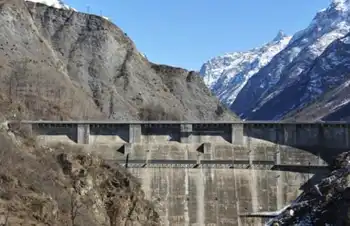
China to build 525-MW hydropower station on Yangtze tributary
Protective Relay Training - Basic
Our customized live online or in‑person group training can be delivered to your staff at your location.
- Live Online
- 12 hours Instructor-led
- Group Training Available
Baima Hydropower Station advances China renewable energy on the Wujiang River, a Yangtze tributary in Chongqing; a 525 MW cascade project approved by NDRC, delivering 1.76 billion kWh and improving river shipping.
Story Summary
An NDRC-approved 525 MW project on Chongqing's Wujiang River, producing 1.76 billion kWh and improving navigation.
10.2 billion yuan investment; final cascade plant on Wujiang in Chongqing
Expected output: 1.76 billion kWh; capacity 525 MW; NDRC approval
Improves river shipping; relocation of 5,000 residents in Wulong
China plans to build a 525-MW hydropower station on the Wujiang River, a tributary of the Yangtze River, in Southwest China's Chongqing municipality, aligning with projects like the Lawa hydropower station elsewhere in the Yangtze basin.
The Baima project, the last of a cascade of hydropower stations on the section of the Wujiang River in Chongqing, has gotten the green light from the National Development and Reform Commission, China's state planning agency, even as some independent power projects elsewhere face uncertainty, such as the Siwash Creek project in British Columbia, the Chongqing Municipal Commission of Development and Reform said Monday.
The project, in Baima township of Wulong district, is expected to involve an investment of 10.2 billion yuan ($1.6 billion), as China explores compressed air generation to bolster grid flexibility, it said.
#google#
With a power-generating capacity of 525 MW, it is expected to generate 1.76 billion kwh of electricity a year, supporting efforts to reduce coal power production nationwide, and help improve the shipping service along the Wujiang River.
More than 5,000 local residents will be relocated to make room for the project, which forms part of a broader energy mix alongside advances in nuclear energy in China.