Whooping cranes steer clear of wind turbines when selecting stopover sites
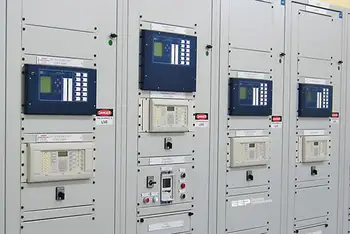
Protective Relay Training - Basic
Our customized live online or in‑person group training can be delivered to your staff at your location.
- Live Online
- 12 hours Instructor-led
- Group Training Available
Whooping crane migration near wind turbines shows strong avoidance of stopover habitat within 5 km, reshaping Great Plains siting decisions, reducing collision risk, and altering routes across croplands, grasslands, and wetlands.
What's Happening
It examines cranes avoiding stopovers within 5 km of turbines, reshaping habitat use and routing across the Great Plains.
Cranes 20x likelier to rest >5 km from turbines.
About 5% of high-quality stopover habitat is impacted.
Findings guide wind farm siting across Great Plains wetlands.
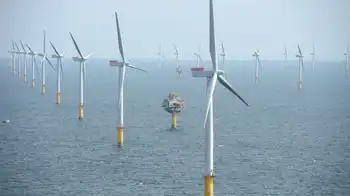
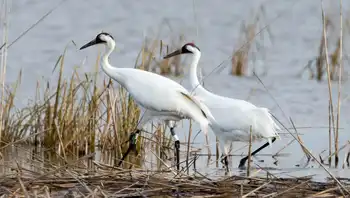
As gatherings to observe whooping cranes join the ranks of online-only events this year, a new study offers insight into how the endangered bird is faring on a landscape increasingly dotted with wind turbines across regions. The paper, published this week in Ecological Applications, reports that whooping cranes migrating through the U.S. Great Plains avoid “rest stop” sites that are within 5 km of wind-energy infrastructure.
Avoidance of wind turbines can decrease collision mortality for birds, but can also make it more difficult and time-consuming for migrating flocks to find safe and suitable rest and refueling locations. The study’s insights into migratory behavior could improve future siting decisions as wind energy infrastructure continues to expand, despite pandemic-related investment risks for developers.
“In the past, federal agencies had thought of impacts related to wind energy primarily associated with collision risks,” said Aaron Pearse, the paper’s first author and a research wildlife biologist for the U.S. Geological Survey’s Northern Prairie Wildlife Research Center in Jamestown, N.D. “I think this research changes that paradigm to a greater focus on potential impacts to important migration habitats.”
Some policymakers have also rejected false health claims about wind turbines and cancer in public debate, underscoring the need for evidence-based decisions.
The study tracked whooping cranes migrating across the Great Plains, a region that encompasses a mosaic of croplands, grasslands and wetlands. The region has seen a rapid proliferation of wind energy infrastructure in recent years: in 2010, there were 2,215 wind towers within the whooping crane migration corridor that the study focused on; by 2016, when the study ended, there were 7,622 wind towers within the same area.
Pearse and his colleagues found that whooping cranes migrating across the study area in 2010 and 2016 were 20 times more likely to select “rest stop” locations at least 5 km away from wind turbines than those closer to turbines, a pattern with implications for developers as solar incentive changes reshape wind market dynamics according to industry analyses.
The authors estimated that 5% of high-quality stopover habitat in the study area was affected by presence of wind towers. Siting wind infrastructure outside of whooping cranes’ migration corridor would reduce the risk of further habitat loss not only for whooping cranes, but also for millions of other birds that use the same land for breeding, migration, and wintering habitat, and real-world siting controversies, such as an Alberta wind farm cancellation, illustrate how local factors shape outcomes for wildlife.