Hydro-Quebec begins talks for $185-billion strategy to wean the province off fossil fuels
Substation Relay Protection Training
Our customized live online or in‑person group training can be delivered to your staff at your location.
- Live Online
- 12 hours Instructor-led
- Group Training Available
Hydro-Québec $185-Billion Clean Energy Plan accelerates hydroelectric upgrades, wind power expansion, solar and battery storage, pumped storage, and 5,000 km transmission lines to decarbonize Quebec, boost grid resilience, and attract bond financing and Indigenous partnerships.
Key Highlights
Plan to grow renewables, harden the grid, and fund Quebec's decarbonization with major investments.
$110B by 2035 for new hydro, wind, solar, and storage.
$50B to modernize and harden transmission and distribution.
5,000 km of new lines; ease Quebec-U.S. transfer constraints.
Add pumped-storage and batteries to meet peak demand.
Financing via bonds; partner with First Nations for projects.
Hydro-Québec is in the preliminary stages of dialogue with various financiers and potential collaborators to strategize the implementation of a $185-billion initiative aimed at transitioning Quebec away from fossil fuel dependency.
As the leading hydroelectric power producer in Canada, Hydro-Québec is set to allocate up to $110 billion by 2035 towards the development of new clean energy facilities, building on its hydropower capacity expansion in recent years, with an additional $50 billion dedicated to enhancing the resilience of its power grid, as revealed in a strategy announced last November. The remainder of the projected expenditure will cover operational costs.
This ambitious initiative has garnered significant interest from the financial sector, with the province's recent electricity for industrial projects also drawing attention, as noted by CEO Michael Sabia during a conference call with journalists where the utility's annual financial outcomes were discussed. Sabia reported receiving various proposals to fund the initiative, though specific partners were not disclosed. He expressed confidence in securing the necessary capital for the project's success.
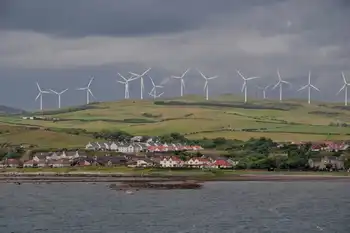
Sabia highlighted three immediate strategies to increase power output: identifying new sites for hydroelectric projects while upgrading turbines at existing facilities, such as the Carillon Generating Station upgrade now underway for enhanced efficiency, expanding wind energy production threefold, and promoting energy conservation among consumers to optimize current power usage.
Additionally, Hydro-Québec aims to augment its solar and battery energy production and is planning to establish a pumped-storage hydroelectric plant to support peak demand periods. The utility also intends to construct 5,000 kilometers of new transmission lines, address Quebec-to-U.S. transmission constraints where feasible, and is set to double its capital expenditure to $16 billion annually, a significant increase from the investment levels during the James Bay hydropower project construction in the 1970s and 1980s.
To fund part of this expansive plan, Hydro-Québec will continue to access the bond market, having issued $3.7 billion in notes to investors last year despite facing several operational hurdles due to adverse weather conditions.
For the year 2023, Hydro-Québec reported a net income of $3.3 billion, marking a 28% decrease from the previous year's record of $4.56 billion. Factors such as insufficient snow cover, reduced spring runoff, and higher temperatures resulted in lower water levels in reservoirs, leading to a reduction in power exports and a $547-million decrease in external market sales compared to the previous year.
The utility experienced its lowest export volume in a decade but managed to leverage hedging strategies to secure 10.3 cents per kWh for exported power to markets including New Brunswick via recent NB Power agreements that expand interprovincial deliveries, nearly twice the average market rate, through forward contracts that cover up to half of its export volume for about a year in advance.
The success of Sabia's plan will partly depend on the cooperation of First Nations communities, as the proposed infrastructure developments are likely to traverse their ancestral territories. Relationships with some communities are currently tense, exemplified by the Innu of Labrador's $4-billion lawsuit against Hydro-Québec for damages related to land flooding for reservoir construction, and broader regional tensions in Newfoundland and Labrador that persist in the power sector.
Sabia has committed to involving First Nations and Inuit communities as partners in clean energy ventures, offering them ongoing financial benefits rather than one-off settlements, a principle he refers to as "economic reconciliation."
Recently, the Quebec government reached an agreement with the Innu of Pessamit, pledging $45 million to support local community development. This agreement outlines solutions for managing a nearby hydropower reservoir, such as the La Romaine complex in the region, and includes commitments for wind energy development.
Sabia is optimistic about building stronger, more positive relationships with various Indigenous communities, anticipating significant progress in the coming months and viewing this year as a potential milestone in transforming these relationships for the better.