Ontario Ministry of Energy proposes growing hydrogen economy through reduced electricity rates
Substation Relay Protection Training
Our customized live online or in‑person group training can be delivered to your staff at your location.
- Live Online
- 12 hours Instructor-led
- Group Training Available
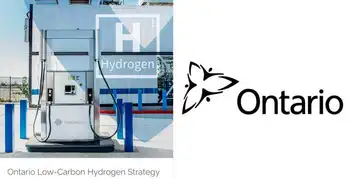
Ontario Hydrogen Strategy accelerates green hydrogen via electrolysis, reduced electricity rates, and IESO pilots, leveraging ICI, interruptible rates, and surplus power to grow clean tech, low-carbon energy, and export markets across Ontario.
Essential Takeaways
A provincial plan to scale green hydrogen with electricity costs, IESO pilots, and surplus power to boost tech.
Amends ICI to admit hydrogen producers from 50 kW demand
Enables co-located electrolysers to use surplus curtailed power
Offers interruptible rates via IESO pilot for flexible loads
The Ontario Ministry of Energy is seeking input on accelerating Ontario’s hydrogen economy. The province has been promoting growth in the clean tech sector, including low-carbon energy production and the Hydrogen Innovation Fund, as an avenue for post-COVID-19 economic recovery. Hydrogen produced through electrolysis (or “green hydrogen”) has been central to these efforts, complimenting both federal and provincial initiatives to create vibrant domestic and export markets for the energy as a principal alternative to conventional fossil fuels.
On April 14, 2022, the Ministry filed a proposal (the Proposal) on the Environmental Registry of Ontario (ERO) to gather input from stakeholders, aligning with the province’s industrial electricity pricing consultation underway. As part of Ontario’s Hydrogen Strategy, the Ministry is considering several options that would provide reduced electricity rates for green hydrogen producers to make production more economically competitive with other energies. To date, the relatively high production cost of green hydrogen has been a challenge facing its adoption, both domestically and internationally.
The Proposal features three options:
- Amending the rules for the Industrial Conservation Initiative (ICI) applicable to hydrogen producers;
- Enabling onsite hydrogen production using electricity that would otherwise be curtailed; and
- Providing an interruptible electricity rate for hydrogen producers.
Option 1: Amending the ICI rules
Option 1 would amend the ICI rules to allow all hydrogen producers with an average monthly peak demand of 50kW to participate. Hydrogen producers’ facilities could qualify for ICI in the first year of operation with a peak demand factor determined based on a deemed consumption profile, using a method yet to be determined by the Ministry. At the end of the first year, their global adjustment (GA) charges would be reconciled based on their actual consumption pattern. As set out in our prior article, GA was introduced by the province in January 2005 to ensure reliable, sustainable and a diverse supply of power at stable and competitive prices, aligning with plans to rely on battery storage to meet rising energy demand. The Ministry’s current proposal would require hydrogen producers to place a security deposit for their facilities’ first year of operation with the Independent Electricity System Operator (IESO) or their Local Distribution Company (LDC) to ensure other consumer would not be adversely affected.
Option 2: Enable onsite hydrogen production using surplus electricity
Option 2 would allow businesses to co-locate hydrogen electrolysers at electricity generation facilities, drawing on recent electrolyzer investment trends, to make use of what would become curtailed generation. Under this option in the Proposal, the developer for the hydrogen production facility would be required to be a separate legal entity from the one that owns or operates the electricity generation facility. Based on this required level of independence, the hydrogen developer would be required to pay the electricity generator for the electricity supply.
At this stage, it is not clear whether, or how the generator would be required to share the revenue with other consumers. The next steps of the Proposal may require regulatory amendments, and/or amendments to electricity generator’s contracts, consistent with efforts enabling storage in Ontario's electricity system to integrate flexible resources.
Option 3: Interruptible electricity rates for hydrogen producers
In 2021, the Ministry posted a proposal on the ERO including an Interruptible Rate Pilot that was to be developed in conjunction with the IESO in order to address stakeholder feedback received during the 2019 Industrial Consultation specific to the challenges of identifying and responding to peak demand events while participating in the ICI. The pilot was targeted towards large electricity consumers, where participants were charged GA at a reduced rate in exchange for agreeing to reduce consumption during system or local reliability events, as identified by IESO.
Option 3 would allow for the introduction for a dedicated stream for hydrogen producers into the interruptible rate pilot, which is currently under development with the IESO. This would take into account the unique circumstances of hydrogen producers, as well as the importance of the hydrogen sector in Ontario’s Low-Carbon Hydrogen Strategy. Under the pilot, participants would be given advance notice by the IESO to reduce demand over a fixed number of hours, several times each year, and emerging vehicle-to-grid models where EV owners can sell electricity back to the grid highlight additional flexibility options. Ultimately, the pilot would support low-carbon hydrogen production by offering large electricity consumers, such as hydrogen producers, reduced electricity rates in exchange for reduces consumption during system or local reliability events.
Following this initial development work, the Ministry intends to consult with stakeholders later this year to determine design details, as well as the timing for the potential roll out of the proposed pilot.
Key takeaways
The design options are not meant to be mutually exclusive, and might be pursued by the Ministry in combination. Ultimately, Ontario is focusing on ways to reduce electricity rates in an attempt to make the province a leader in the adoption of green hydrogen, as made clear in the Ontario Hydrogen Strategy, even as an electricity supply crunch looms, underscoring the urgency. Stakeholders will want to participate in this process given its long-term implications for both the hydrogen and power sectors.