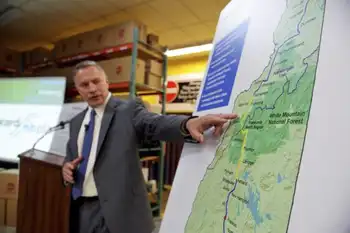
Are Net-Zero Energy Buildings Really Coming Soon to Mass?
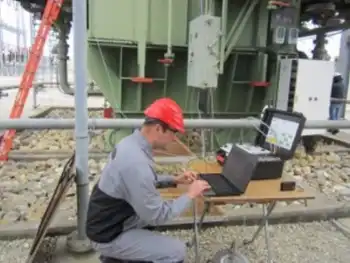
Substation Relay Protection Training
Our customized live online or in‑person group training can be delivered to your staff at your location.
- Live Online
- 12 hours Instructor-led
- Group Training Available
Massachusetts Energy Code Updates align DOER regulations with BBRS standards, advancing Stretch Code and Specialized Code beyond the Base Energy Code to accelerate net-zero construction, electrification, and high-efficiency building performance across municipal opt-in communities.
The Important Points
They are DOER-led changes to Base, Stretch, and Specialized Codes to drive net-zero, electrified, efficient buildings.
Updates apply Base, Stretch, or opt-in Specialized Code.
Targets net-zero by 2050 with electrification-first design.
Municipalities choose code path via City Council or Town Meeting.
Massachusetts will soon see significant updates to the energy codes that govern the construction and alteration of buildings throughout the Commonwealth.
As required by the 2021 climate bill, the Massachusetts Department of Energy Resources (DOER) has recently finalized regulations updating the current Stretch Energy Code, previously promulgated by the state's Board of Building Regulations and Standards (BBRS), and establishing a new Specialized Code geared toward achieving net-zero building energy performance.
The final code has been submitted to the Joint Committee on Telecommunications, Utilities, and Energy for review as required under state law, amid ongoing Connecticut market overhaul discussions that could influence regional dynamics.
Under the new regulations, each municipality must apply one of the following:
Base Energy Code - The current Base Energy Code is being updated by the BBRS as part of its routine updates to the full set of building codes. This base code is the default if a municipality has not opted in to an alternative energy code.
Stretch Code - The updated Stretch Code creates stricter guidelines on energy-efficiency for almost all new constructions and alterations in municipalities that have adopted the previous Stretch Code, paralleling 100% carbon-free target in Minnesota and elsewhere to support building decarbonization. The updated Stretch Code will automatically become the applicable code in any municipality that previously opted-in to the Stretch Code.
Specialized Code - The newly created Specialized Code includes additional requirements above and beyond the Stretch Code, designed to get to ensure that new construction is consistent with a net-zero economy by 2050, similar to Canada's clean electricity regulations that set a 2050 decarbonization pathway. Municipalities must opt-in to adopt the Specialized Code by vote of City Council or Town Meeting.
The new codes are much too detailed to summarize in a blog post. You can read more here. Without going into those details here, it is worth noting a few significant policy implications of the new regulations:
With roughly 90% of Massachusetts municipalities having already adopted the prior version of the Stretch Code, the Commonwealth will effectively soon have a new base code that, even if it does not mandate zero-energy buildings, is nonetheless very aggressive in pushing new construction to be as energy-efficient as possible, as jurisdictions such as Ontario clean electricity regulations continue to reshape the power mix.
Although some concerns have been raised about the cost of compliance, particularly in a period of high inflation, and amid solar demand charge debates in Massachusetts, our understanding is that many developers have indicated that they can work with the new regulations without significant adverse impacts.
Of course, the success of the new codes depends on the success of the Commonwealth's efforts to transition quickly to a zero-carbon electrical grid, supported by initiatives like the state's energy storage solicitation to bolster reliability. If the cost of doing so is higher than expected, there could well be public resistance. If new transmission doesn't get built out sufficiently quickly or other problems occur, such that the power is not available to electrify all new construction, that would be a much more significant problem - for many reasons!
In short, the new regulations unquestionably set the Commonwealth on a course to electrify new construction and squeeze carbon emissions out of new buildings. However, as with the rest of our climate goals, there are a lot of moving pieces, including proposals for a clean electricity standard shaping the power sector that are going to have to come together to make the zero-carbon economy a reality.