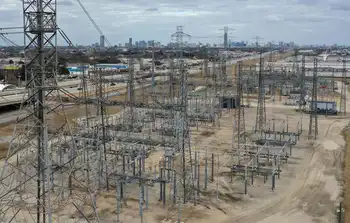
Global electric power demand surges above pre-pandemic levels
Substation Relay Protection Training
Our customized live online or in‑person group training can be delivered to your staff at your location.
- Live Online
- 12 hours Instructor-led
- Group Training Available
Global Power Sector CO2 Surge 2021 shows electricity demand outpacing renewable energy, with coal and fossil fuels rebounding, undermining green recovery goals and climate change targets flagged by the IEA and IPCC.
The Main Points
Record rise in power sector CO2 in 2021 as demand outpaced renewables and coal rebounded, undermining a green recovery.
Electricity demand 5% above pre-Covid, straining power systems
61% of global electricity from fossil fuels in 2020
Coal supplied 43% of added demand 2019-2020; rebound expected in 2021
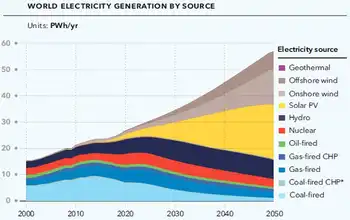
Wind and solar up 15% in 2020; near 10% of global generation
Carbon dioxide emissions from the global electric power sector surged past pre-pandemic levels to record highs in the first half of 2021, according to new research by London-based environmental think tank Ember.
Electricity demand and emissions are now 5% higher than where they were before the Covid-19 outbreak, which prompted worldwide lockdowns that led to a temporary drop in global greenhouse gas emissions. Electricity demand also surpassed the growth of renewable energy, and surging electricity demand is putting power systems under strain, the analysis found.
The findings signal a failure of countries to achieve a so-called “green recovery” that would entail shifting away from fossil fuels toward renewable energy, though European responses to Covid-19 have accelerated the electricity system transition by about a decade, to avoid the worst consequences of climate change.
The report found that 61% of the world’s electricity still came from fossil fuels in 2020. Five G-20 countries had more than 75% of their electricity supplied from fossil fuels last year, with Saudi Arabia at 100%, South Africa at 89%, Indonesia at 83%, Mexico at 75% and Australia at 75%.
Coal generation did fall a record 4% in 2020, but overall coal supplied 43% of the additional energy demand between 2019 and 2020, with soaring electricity and coal use underscoring persistent demand pressures. Asia currently generates 77% of the world’s coal electricity and China alone generates 53%, up from 44% in 2015.
The world’s transition out of coal power, which contributes to roughly 30% of the world’s greenhouse gas emissions, is happening far too slowly to avoid the worst impacts of climate change, the study warned. And the International Energy Agency forecasts coal generation will rebound in 2021 as electricity demand picks up again, even as renewables are poised to eclipse coal by 2025 according to other analyses.
“Progress is nowhere near fast enough. Despite coal’s record drop during the pandemic, it still fell short of what is needed,” Ember lead analyst Dave Jones said in a statement.
Jones said coal power usage must collapse by 80% by the end of the decade to avoid dangerous levels of global warming above 1.5 degrees Celsius (2.7 degrees Fahrenheit).
“We need to build enough clean electricity to simultaneously replace coal and electrify the global economy,” Jones said. “World leaders have yet to wake up to the enormity of the challenge.”
The findings come ahead of a major U.N. climate conference in Glasgow, Scotland, in November, where negotiators will push for more ambitious climate action and emissions reduction pledges from nations.
Without immediate, rapid and large-scale reductions to global emissions, scientists of the Intergovernmental Panel on Climate Change warn that the average global temperature will likely cross the 1.5 degrees Celsius threshold within 20 years.
The study also highlighted some upsides. Wind and solar generation, for instance, rose by 15% in 2020, and low-emissions sources are set to cover almost all the growth in global electricity demand in the next three years, producing nearly a tenth of the world’s electricity last year and doubling production since 2015.
Some countries now get about 10% of their electricity from wind and solar, including India, China, Japan, Brazil. The U.S. and Europe have experienced the biggest growth in wind and solar, and in the EU, wind and solar generated more electricity than gas last year, with Germany at 33% and the U.K. leads the G20 for wind power at 29%.