ERCOT Concerns tied to Crypto Mining
Protective Relay Training - Basic
Our customized live online or in‑person group training can be delivered to your staff at your location.
- Live Online
- 12 hours Instructor-led
- Group Training Available
Texas’s booming data-center and crypto-mining growth threatens grid reliability as facilities frequently trip offline during disturbances, prompting ERCOT to propose “ride-through” rules for large electronic loads to stabilize demand.
At A Glance
-
Surge in high-power data centers and crypto-mining facilities in Texas is straining the grid.
-
Frequent trips during voltage/frequency disturbances risk cascading outages on peak-demand days.
-
New ERCOT proposals would require large computing loads to maintain output during grid events.
-
Operators may need on-site generation or backup to meet “ride-through” requirements.
Texas Power Grid Faces Pressure from Data-Center Boom
As Texas continues to attract high-power data centers and crypto-mining facilities, the state’s grid is coming under fresh pressure — and regulators are starting to push back. According to documents scheduled for discussion by Electric Reliability Council of Texas (ERCOT) next week, a growing number of these large-load facilities have gone offline during what would be considered routine grid disturbances since 2023. Growing concerns about crypto-related grid strain in the United States mirror issues highlighted in BC Crypto Suspension, where regulators intervened to curb the impact of high-demand mining operations.
“Generally speaking, we want load growth because it helps with economic development, and we want that in our state. The problem is about the speed, the uncertainty and the management of that growth,” said Matt Boms, executive director of the Texas Advanced Energy Business Alliance.
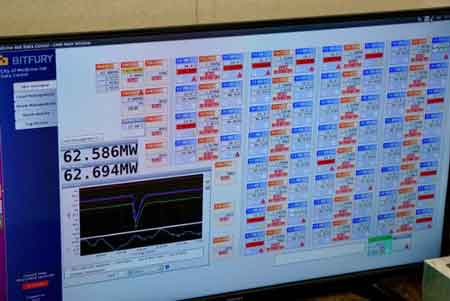
ERCOT reports 26 trips of large electronic-load facilities over the past two years caused by normal voltage or frequency dips. Because many data centers and crypto-mining operations are highly sensitive to such fluctuations, a single trip can cause “hundreds of megawatts” to vanish from the grid in seconds, enough to trigger cascading outages, grid officials warn. “What can happen is during a normal grid disturbance a facility could just drop offline instantly,” Boms cautioned.
Growing demand for cryptocurrency mining has even prompted overseas warnings, such as those in Iceland, where power-intensive bitcoin mining is threatening to destabilize the national grid.
To address the threat, ERCOT is proposing new rules for any “large electronic load”, defined as facilities that consume more than 75 megawatts and use at least half the power for computing. Under the new rules, such facilities will be required to “ride through” voltage or frequency disturbances rather than immediately cut off.
Boms said one realistic way for operators to comply is to bring their own generation on site. That approach, he argued, would reduce stress on the grid, avoid external infrastructure upgrades, and enable data centers to maintain operations during disturbances without triggering broader outages.
Recent studies of crypto’s footprint show that Bitcoin’s power draw, as described in Bitcoin Electricity Consumption, has become a major concern for grid stability as mining operations expand.
Whether the proposal passes, the spotlight is now on Texas and the rest of the U.S., as electricity demand surges in lockstep with growth in high-load digital operations.
Related Articles