By Land and Sea, Clean Electricity Needs to Lead the Way
NFPA 70b Training - Electrical Maintenance
Our customized live online or in‑person group training can be delivered to your staff at your location.

- Live Online
- 12 hours Instructor-led
- Group Training Available
Martha's Vineyard 100% Renewable Energy advances electrification across EVs, heat pumps, distributed solar, offshore wind, microgrids, and battery storage, cutting emissions, boosting efficiency, and strengthening grid resilience for storms and sea-level rise.
What You Need to Know
It is an islandwide plan to electrify transport and buildings using wind, solar, storage, and a modern resilient grid.
Targets 100% renewable electricity and deep fossil reduction by 2040
Accelerates EVs and ferry hybridization to cut transport emissions
Scales heat pumps for efficient building heating and cooling
Grows distributed solar, offshore wind, batteries, and utility VPP control
Builds microgrids and modernized distribution for storm resilience
Over the past year, it has become increasingly clear that climate change is accelerating. Here in coastal New England, annual temperatures and precipitation have risen more quickly than expected, tidal flooding is now commonplace, and storms have increased in frequency and intensity. The window for avoiding the worst consequences of a climate-changed planet is closing.
At their recent special town meeting, Oak Bluffs citizens voted to approve the 100 per cent renewable Martha’s Vineyard warrant article; now, all six towns have adopted the same goals for fossil fuel reduction and green electricity over the next two decades. Establishing these targets for the adoption of renewable energy, though, is only an initial step. Town and regional master plans for energy transformation are being developed, but this is a whole-community effort as well. Now is the time for action.
There is much to do to combat climate change, but our most important task is to transition our energy system from one heavily dependent on fossil fuels to one that is based on clean electricity. The good news is that this can be accomplished with currently available technology, and can be done in an economically efficient manner.
Electrification not only significantly lowers greenhouse gas emissions, but also is a powerful energy efficiency measure. So even though our detailed Island energy model indicates that eliminating all (or almost all) fossil fuel use will mean our electricity use will more than double, posing challenges for state power grids in some regions, our overall annual energy consumption will be significantly lower.
So what do we specifically need to do?
The primary targets for electrification are transportation (roughly 60 peer cent of current fossil fuel use on Martha’s Vineyard) and building heating and cooling (40 per cent).
Over the past two years, the increase in the number of electric vehicle models available across a wide range of price points has been remarkable — sedans, SUVs, crossovers, pickup trucks, even transit vans. When rebates and tax credits are considered, they are affordable. Range anxiety is being addressed both by increases in vehicle performance and the growing availability of charging locations (other than at home, which will be the predominant place for Islanders to refuel) and, over time, enable vehicle-to-grid support for our local system. An EV purchase should be something everyone should seriously consider when replacing a current fossil vehicle.
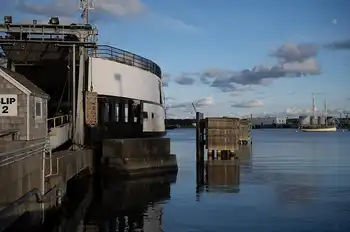
The elephant in the transportation sector room is the Steamship Authority. The SSA today uses roughly 10 per cent of the fossil fuel attributable to Martha’s Vineyard, largely but not totally in the ferries. The technology needed for fully electric short-haul vessels has been under development in Scandinavia for a number of years and fully electric ferries are in operation there. A conservative approach for the SSA would be to design new boats to be hybrid diesel-electric, retrofittable to plug-in hybrids to allow for shoreside charging infrastructure to be planned and deployed. Plug-in hybrid propulsion could result in a significant reduction in emissions — perhaps as much as 95 per cent, per the long-range plan for the Washington State ferries. While the SSA has contracted for an alternative fuel study for its next boat, given the long life of the vessels, an electrification master plan is needed soon.
For building heating and cooling, the answer for electrification is heat pumps, both for new construction and retrofits. These devices move heat from outside to inside (in the winter) or inside to outside (summer), and are increasingly integrated into connected home energy systems for smarter control. They are also remarkably efficient (at least three times more efficient than burning oil or propane), and today’s technology allows their operation even in sub-zero outside temperatures. Energy costs for electric heating via heat pumps on the Vineyard are significantly below either oil or propane, and up-front costs are comparable for new construction. For new construction and when replacing an existing system, heat pumps are the smart choice, and air conditioning for the increasingly hot summers comes with the package.
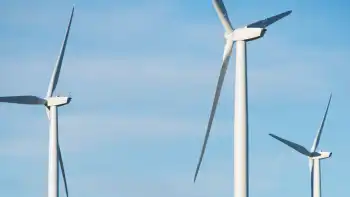
A frequent objection to electrification is that fossil-fueled generation emits greenhouse gases — thus a so-called green grid is required in order to meet our targets. The renewable energy fraction of our grid-supplied electricity is today about 30 per cent; by 2030, under current legislation that fraction will reach 54 per cent, and by 2040, 77 per cent. Proposed legislation will bring us even closer to our 2040 goals. The Vineyard Wind project will strongly contribute to the greening of our electricity supply, and our local solar generation (almost 10 per cent of our overall electricity use at this point) is non-negligible.
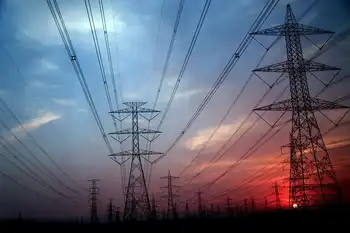
A final important facet of our energy system transformation is resilience. We are dependent today on our electricity supply, and this dependence will grow. As we navigate the challenges of climate change, with increasingly more frequent and more serious storms, 2021 electricity lessons underscore that resilience of electricity supply is of paramount importance. In many ways, today’s electricity distribution system is basically the same approach developed by Edison in the late 19th century. In partnership with our electric utility, we need to modernize the grid to achieve our resiliency goals.
While the full scope of this modernization effort is still being developed, the outline is clear. First, we need to increase the amount of energy generated on-Island — to perhaps 25 per cent of our total electricity use. This will be via distributed energy resources (in the form of distributed solar and battery installations as well as community solar projects) and the application of advanced grid control systems. For emergency critical needs, the concept of local microgrids that are detachable from the main grid when that grid suffers an outage are an approach that is technically sound and being deployed elsewhere. Grid coordination of distributed resources by the utility allows for handling of peak power demand; in the early 2030s this could result in what is known as a virtual power plant on the Island.
The adoption of the 100 renewable Martha’s Vineyard warrant articles is an important milestone for our community. While the global and national efforts in the climate crisis may sometimes seem fraught, we can take some considerable pride in what we have accomplished so far and will accomplish in coming years. As with many change efforts, the old catch-phrase applies: think globally, act locally.