DOE Announces $34 Million to Improve America?s Power Grid
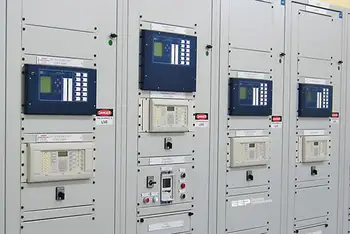
Protective Relay Training - Basic
Our customized live online or in‑person group training can be delivered to your staff at your location.
- Live Online
- 12 hours Instructor-led
- Group Training Available
DOE GOPHURRS Grid Undergrounding accelerates ARPA-E innovations to modernize the power grid, boosting reliability, resilience, and security via underground power lines, AI-driven surveying, robotic tunneling, and safer cable splicing for clean energy transmission and distribution.
The Important Points
A DOE-ARPA-E program funding undergrounding tech to modernize the grid and improve reliability and security.
$34M for 12 projects across 11 states via ARPA-E.
Focus: faster, safer, lower-cost undergrounding tools.
Backed by Biden's 100% clean electricity by 2035 goal.
Partners include universities, labs, startups, and GE Vernova.
The U.S. Department of Energy (DOE) has earmarked $34 million for 12 innovative projects across 11 states to bolster and modernize the nation’s power grid, complementing efforts like a Washington state infrastructure grant announced to strengthen resilience.
Under the Grid Overhaul with Proactive, High-speed Undergrounding for Reliability, Resilience, and Security (GOPHURRS) program, this funding is focused on developing efficient and secure undergrounding technologies. The initiative is aligned with President Biden’s vision to strengthen America's energy infrastructure and advance smarter electricity infrastructure priorities, thereby creating jobs, enhancing energy and national security, and advancing towards a 100% clean electricity grid by 2035.
U.S. Secretary of Energy Jennifer M. Granholm emphasized the criticality of modernizing the power grid to facilitate a future powered by clean energy, including efforts to integrate more solar into the grid nationwide, thus reducing energy costs and bolstering national security. This development, she noted, is pivotal in bringing the grid into the 21st Century.
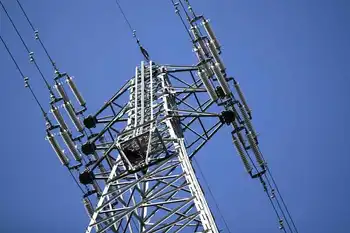
The U.S. electric power distribution system, comprising over 5.5 million line miles and over 180 million power poles, is increasingly vulnerable to weather-related damage, contributing to a majority of annual power outages. Extreme weather events, intensified by climate change impacts across the nation, exacerbate the frequency and severity of these outages. Undergrounding power lines is an effective measure to enhance system reliability for transmission and distribution grids.
Managed by DOE’s Advanced Research Projects Agency-Energy (ARPA-E), the newly announced projects include contributions from small and large businesses, national labs, and universities. These initiatives are geared towards developing technologies that will lower costs, expedite undergrounding operations, and enhance safety. Notable projects involve innovations like Arizona State University’s water-jet construction tool for deploying electrical cables underground, GE Vernova Advanced Research’s robotic worm tunnelling construction tool, and Melni Technologies’ redesigned medium-voltage power cable splice kits.
Other significant projects include Oceanit’s subsurface sensor system for avoiding utility damage during undergrounding and Pacific Northwest National Laboratory’s AI system for processing geophysical survey data. Prysmian Cables and Systems USA’s project focuses on a hands-free power cable splicing machine to improve network reliability and workforce safety, complementing state efforts like California's $500 million grid investment to upgrade infrastructure.
Complete descriptions of these projects can be found on the ARPA-E website, while a recent grid report card highlights challenges these efforts aim to address.
ARPA-E’s mission is to advance clean energy technologies with high potential and impact, playing a strategic role in America’s energy security, including military preparedness for grid cyberattacks as a priority. This commitment ensures the U.S. remains a global leader in developing and deploying advanced clean energy technologies.