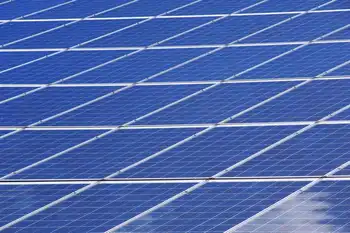
Canada is a solar power laggard, this expert says
Substation Relay Protection Training
Our customized live online or in‑person group training can be delivered to your staff at your location.
- Live Online
- 12 hours Instructor-led
- Group Training Available
Canada Distributed Energy faces disruption as solar, smart grids, microgrids, and storage scale utility-scale renewables, challenging centralized utilities and accelerating decarbonization, grid modernization, and distributed generation across provinces like Alberta.
The Important Points
Canada Distributed Energy shifts from centralized grids to local solar, wind, and storage for reliable low-carbon power.
Alberta Solar One 13.7 MW validates Morgan Solar optics with Enbridge.
Smart grids, microgrids, and storage challenge hub-and-spoke utilities.
Regulatory inertia and incumbent mandates slow distributed adoption.
Alberta solar pipeline grows; investors back AQN, NPI, UGE, VNP exposure.
Studies find 2035 zero-emission power feasible with DER integration.
By Nick Waddell
Disruption is coming to electricity generation but Canada has become a laggard when it comes to not just adoption of alternative energy sources but in moving to a more distributed model of electricity generation. That’s according to Mike Andrade, CEO of Morgan Solar, whose new solar project in conjunction with Enbridge has just come online in Alberta, a province known as a powerhouse for both green and fossil energy in Canada.
“There’s a lot of inertia to Canada’s electrical system and I don’t think that bodes well,” said Andrade, who spoke on BNN Bloomberg on Thursday.
“Canada is one of the poorest places for uptake of solar, as NEB data on solar demand indicates,” Andrade said, “I believe a lot of it has to do with the fact that we have strong provincial utilities that have their mandates and their chosen technologies.”
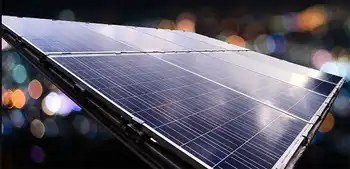
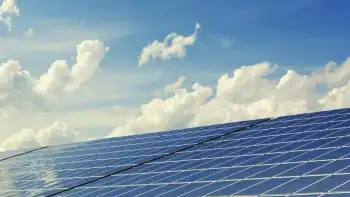
Alberta Solar One, a 13.7 MW power facility near Lethbridge, Alberta, had its unveiling this week amid red-hot solar growth in Alberta that shows no sign of slowing. It’s a 36,500-panel farm constructed by Enbridge in a quick six-month turnaround as part of the power company’s pledge to become a carbon-free generator by 2050. Along with solar, Enbridge has made big investments in offshore and onshore wind farms in the United States, while also producing so-called green hydrogen at an Ontario plant.
Private company Morgan Solar considers the Alberta Solar One project as the first utility-scale validation of its technology, which uses optical films to redirect light onto photovoltaic cells to further power production.
“We use an advanced modelling system and a variety of tools to design very simple optical systems that can be easily inserted into a panel,” Andrade said. “They cost less and bring down the cost per watt. It captures light that would otherwise miss the cells and so you get more power per cell area than any other commercial technology at this point.”
Like renewables in general, solar energy has been thrust into the spotlight as governments worldwide aim to make good on their climate change and emissions pledges, with analyses showing zero-emissions electricity by 2035 is possible in Canada, and convert power generation from fossil fuels to alternative sources.
The market has paid attention, too, driving up values on renewable energy stocks across the board, including solar stocks, as provinces like Alberta explore selling renewable energy into broader markets. Last year, the Invesco Solar ETF, which tracks the MAC Global Solar Energy Index, soared 234 per cent, while Canadian companies with solar assets like Algonquin Power and Northland Power have been winners over the past few years.
Canadian cleantech companies involved in the solar power sector have also fared well, with names like UGE International (UGE International Stock Quote, Chart, News, Analyst. Financials TSXV:UGE), Aurora Solar and 5N Plus (5N Plus Stock Quote, Chart, News, Analysts, Financials TSX:VNP) having attracted investor attention of late.
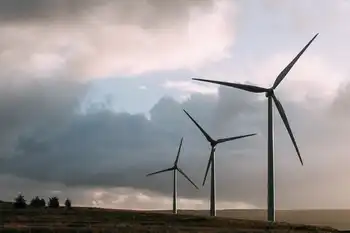
Currently, part of the push in alternative energy involves the move from centralized to a more distributed picture of power generation, where solar panels, wind turbines and small modular nuclear reactors can operate close to or within sources of consumption like cities.
But Andrade says Canada has a lot of catching up to do on that front, especially as its current system seems devoted to maintaining the precedence of large, centralized power production — along with the utility companies that generate it.
“Canada is going to be left with this big, old fashioned hub and spoke model, and that’s increasingly going to be out-competed by a distributed grid, call them smart grids or micro grids,” Andrade said.
“That’s the future that solar is going to drive along with storage, and I personally don’t think Canada is prepared for it, not because we can’t do it but because regulatory and incumbency is holding us back from doing that,” he said.
“We pay our utilities, saying, ‘You invest capital and we’ll give you a fixed return on capital.’ Well, guess what? You’re going to get large, centralized capital projects which are going to get big central generation hub and spoke distribution,” Andrade said.
Ahead of the Canadian federal government’s tabling next week of its first budget in two years, many in the energy sector will be taking notes on the Liberal government’s investments in the so-called green recovery after the economic downturn, with renewable energy proponents hoping for further support, noting Alberta’s renewable energy surge could power thousands of jobs, to shift Canada’s resource sector away from fossil fuels.



By comparison, President Biden in the US recently unveiled his $2-billion infrastructure plan which put precedence on greening the country’s power grid, encouraging the adoption of electric vehicles and supporting renewable resource development, and Canadian studies suggest 2035 zero-emission power is practical and profitable as well across the national grid.
On disruption in power generation, Andrade said there are parallels to be drawn from information technology, which has historically made a point of discarded outdated models along the way.
“I was at IBM, and they had the mainframe business and that got blown up. I also worked with Nortel and Celestica and they got blown up —and it wasn’t due to having better central hub and spoke systems. They got beat up by this distributed system,” Andrade said.
“The same thing is going to happen here and the disruption is coming in electricity generation as well,” he said.
About The Author - Nick Waddell
Cantech Letter founder and editor Nick Waddell has lived in five Canadian provinces and is proud of his country's often overlooked contributions to the world of science and technology. Waddell takes a regular shift on the Canadian media circuit, making appearances on CTV, CBC and BNN, and contributing to publications such as Canadian Business and Business Insider.