Opinion: Fossil-fuel workers ready to support energy transition
CSA Z462 Arc Flash Training – Electrical Safety Compliance Course
Our customized live online or in‑person group training can be delivered to your staff at your location.

- Live Online
- 6 hours Instructor-led
- Group Training Available
Canada Net-Zero Transition unites energy workers, R&D, and clean tech to decarbonize steel and cement with hydrogen, scale renewables, and build hybrid storage, delivering a just transition that strengthens communities and the economy.
Breaking Down the Details
A national plan to reach net-zero by 2050 via renewables, hydrogen, decarbonization, and a just transition for workers.
Unites fossil workforce, researchers, and clean tech firms
Targets steel and cement decarbonization via hydrogen
Scales renewables and modernizes Canada's grid
Develops hybrid energy storage to balance variable supply
Ensures a just transition for workers and communities
Except for an isolated pocket of skeptics, there is now an almost universal acceptance that climate change is a global emergency that demands immediate and far-reaching action to defend our home and future generations. Yet in Canada we remain largely focused on how the crisis divides us rather than on the potential for it to unite us, despite nationwide progress in electricity decarbonization efforts.
It’s not a case of fossil-fuel industry workers versus the rest, or Alberta versus British Columbia where bridging the electricity gap could strengthen cooperation. We are all in this together. The challenge now is how to move forward in a way that leaves no one behind.
The fossil fuel industry has been — and continues to be — a key driver of Canada’s economy. Both of us had successful careers in the energy sector, but realized, along with an increasing number of energy workers, that the transition we need to cope with climate change could not be accomplished solely from within the industry.
Even as resource companies innovate to significantly reduce the carbon burden of each barrel, the total emission of greenhouse gases from all sources continues to rise. We must seize the opportunity to harness this innovative potential in alternative and complementary ways, mobilizing research and development, for example, to power carbon-intensive steelmaking and cement manufacture from hydrogen or to advance hybrid energy storage systems and decarbonizing Canada's electricity grid strategies — the potential for cross-over technology is immense.
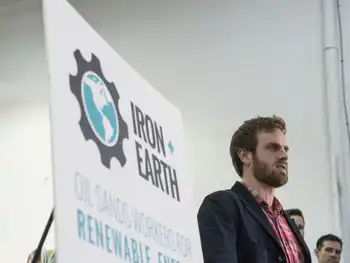
The bottom line is inescapable: we must reach net-zero emissions by 2050 in order to prevent runaway global warming, which is why we launched Iron & Earth in 2016. Led by oilsands workers committed to increasingly incorporating renewable energy projects into our work scope, our non-partisan membership now includes a range of industrial trades and professions who share a vision for a sustainable energy future for Canada — one that would ensure the health and equity of workers, our families, communities, the economy, and the environment.
Except for an isolated pocket of skeptics, there is now an almost universal acceptance that climate change is a global emergency that demands immediate and far-reaching action, including cleaning up Canada's electricity to meet climate pledges, to defend our home and future generations. Yet in Canada we remain largely focused on how the crisis divides us rather than on the potential for it to unite us.
It’s not a case of fossil-fuel industry workers versus the rest, or Alberta versus British Columbia. We are all in this together. The challenge now is how to move forward in a way that leaves no one behind.
The fossil fuel industry has been — and continues to be — a key driver of Canada’s economy. Both of us had successful careers in the energy sector, but realized, along with an increasing number of energy workers, that the transition we need to cope with climate change could not be accomplished solely from within the industry.
Even as resource companies innovate to significantly reduce the carbon burden of each barrel, the total emission of greenhouse gases from all sources continues to rise, underscoring that Canada will need more electricity to hit net-zero, according to the IEA. We must seize the opportunity to harness this innovative potential in alternative and complementary ways, mobilizing research and development, for example, to power carbon-intensive steelmaking and cement manufacture from hydrogen or to advance hybrid energy storage systems — the potential for cross-over technology is immense.
The bottom line is inescapable: we must reach net-zero emissions by 2050 in order to prevent runaway global warming, which is why we launched Iron & Earth in 2016. Led by oilsands workers committed to increasingly incorporating renewable energy projects into our work scope, as calls for a fully renewable electricity grid by 2030 gain attention, our non-partisan membership now includes a range of industrial trades and professions who share a vision for a sustainable energy future for Canada — one that would ensure the health and equity of workers, our families, communities, the economy, and the environment.