Africa must quadruple power investment to supply electricity for all, IEA says
CSA Z462 Arc Flash Training – Electrical Safety Compliance Course
Our customized live online or in‑person group training can be delivered to your staff at your location.

- Live Online
- 6 hours Instructor-led
- Group Training Available
Africa Energy Investment must quadruple, says IEA, to deliver electricity access via grids, mini-grids, and stand-alone solar PV, wind, hydropower, natural gas, and geothermal, targeting $120 billion annually and 2.5% of GDP.
What This Means
Africa Energy Investment funds reliable, low-carbon electricity via grids, mini-grids, and renewables.
Quadruple power investment across grids, mini-grids, and stand-alone systems.
Annual need: $120B, equal to roughly 2.5% of continental GDP.
Risks: 530M Africans without power by 2030 under current policies.
Scale-up PV 15 GW per year; expand wind, hydro, gas, and geothermal.
Goal: reliable, affordable, lower-carbon electricity for all Africans.
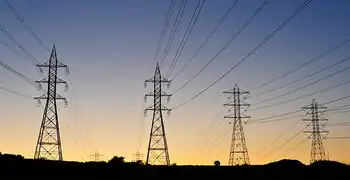
African countries will need to quadruple their rate of investment in their power sectors for the next two decades to bring reliable electricity to all Africans, as outlined in the IEA’s path to universal access analysis, an International Energy Agency (IEA) study published on Friday said.
If African countries continue on their policy trajectories, 530 million Africans will still lack electricity in 2030, the IEA report said. It said bringing reliable electricity to all Africans would require annual investment of around $120 billion and a global push for clean, affordable power to mobilize solutions.
“We’re talking about 2.5% of GDP that should go into the power sector,” Laura Cozzi, the IEA’s Chief Energy Modeller, told journalists ahead of the report’s launch. “India’s done it over the past 20 years. China has done it, with solar PV growth outpacing any other fuel, too. So it’s something that is doable.”
Taking advantage of technological advances and optimizing natural resources, as highlighted in a renewables roadmap, could help Africa’s economy grow four-fold by 2040 while requiring just 50% more energy, the agency said.
Africa’s population is currently growing at more than twice the global average rate. By 2040, it will be home to more than 2 billion people. Its cities are forecast to expand by 580 million people, a historically unprecedented pace of urbanization.
While that growth will lead to economic expansion, it will pile pressure on power sectors that have already failed to keep up with demand, with the sub-Saharan electricity challenge intensifying across the region. Nearly half of Africans - around 600 million people - do not have access to electricity. Last year, Africa accounted for nearly 70% of the global population lacking power, a proportion that has almost doubled since 2000, the IEA found.
Some 80% of companies in sub-Saharan Africa suffered frequent power disruptions in 2018, leading to financial losses that curbed economic growth.
The IEA recommended changing how power is distributed, with mini-grids and stand-alone systems like household solar playing a larger role in complementing traditional grids as targeted efforts to accelerate access funding gain momentum.
According to IEA Executive Director Fatih Birol, with the right government policies and energy strategies, Africa has an opportunity to pursue a less carbon-intensive development path than other regions.
“To achieve this, it has to take advantage of the huge potential that solar, wind, hydropower, natural gas and energy efficiency offer,” he said.
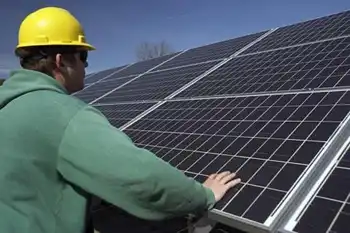
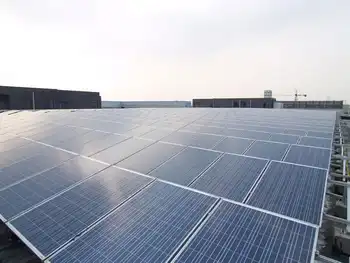
Despite possessing the world’s greatest solar potential, Africa boasts just 5 gigawatts of solar photovoltaics (PV), or less than 1% of global installed capacity, a slow green transition that underscores the scale of the challenge, the report stated.
To meet demand, African nations should add nearly 15 gigawatts of PV each year through 2040. Wind power should also expand rapidly, particularly in Ethiopia, Kenya, Senegal and South Africa. And Kenya should develop its geothermal resources.