Yale Report on Western Grid Integration: Just Say Yes

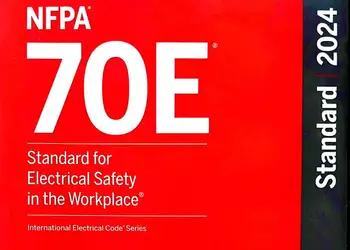
NFPA 70E Training
Our customized live online or in‑person group training can be delivered to your staff at your location.
- Live Online
- 6 hours Instructor-led
- Group Training Available
Western Grid Integration aligns CAISO with a regional transmission operator under FERC oversight, boosting renewables, reliability, and cost savings while respecting state energy policy, emissions goals, and utility regulation across the West.
Inside the Issue
Western Grid Integration lets CAISO operate under FERC to cut costs, boost reliability, and accelerate renewables.
FERC oversight preserves state authority over energy and climate policy.
Replaces 38-entity fragmentation with coordinated regional operations.
Lowers system costs and bills via broader dispatch and transmission sharing.
Enhances reliability and outage resilience through regional balancing.
Favors renewables due to lower marginal costs and expanded market access.
A strong and timely endorsement for western grid integration forcefully rebuts claims that moving from a balkanized system with 38 separate entities to a regional operation could introduce environmental problems, raise costs, or, as critics warn, export California’s energy policies to other western states, or open state energy and climate policies to challenge by federal regulators. In fact, Yale University’s Environmental Protection Clinic identifies numerous economic and environmental benefits from allowing the California Independent System Operator to become a regional grid operator.
The groundbreaking report comprehensively examines the policy and legal merits of allowing the California Independent System Operator (CAISO) to become a regional grid operator, open to any western utility or generator that wants to join, as similar market structure overhauls proceed in New England.
The Yale report identifies the increasing constraints that today’s fragmented western grid imposes on system-wide electricity costs and reliability, addresses the potential benefits of integration, and evaluates potential legal risks for the states involved. California receives particular attention because its legislature is considering the first step in the grid integration process, which involves authorizing the CAISO to create a fully independent board, even as it examines revamping electricity rates to clean the grid (other western states are unlikely to approve joining an entity whose governance is determined solely by California’s governor and legislature, as is the case now).
Elements of the report
The analysis examined all of California’s key energy and climate policies, from its cap on carbon emissions to its renewable energy goals and its pollution standards for power plants, and concludes that none would face additional legal risks under a fully integrated western grid. The operator of such a grid would be regulated by an independent federal agency (the Federal Energy Regulatory Commission)—but so is the CAISO itself, now and since its inception, by virtue of its extended involvement in interstate electricity commerce throughout the West.
And if empowered to serve the entire region, the CAISO would not interfere with the longstanding rights of California and other states to regulate their utilities’ investments or set energy and climate policies. The study points out that grid operators don’t set energy policies for the states they serve; they help those states minimize costs, enhance reliability in the wake of California blackouts across the state, and avoid unnecessary pollution.
And as to whether an integrated grid would help renewable energy or fossil fuels, the report finds that renewable resources would be the inevitable winners, thanks to their lower operating costs, although the most important winners would be western utility customers, through lower bills, expanded retail choice options, and improved reliability.
Call to action
The Yale report concludes with what amounts to a call to action for California’s legislators:
“In sum, enhanced Western grid integration in general, and the emergence of a regional system operator in particular, would not expose California’s clean energy policies to additional legal risks. Shifting to a regional grid operator would enable more efficient, affordable and reliable integration of renewable resources without increasing the legal risk to California’s clean energy policies.”
The authors of the analysis, from the Yale Law School and the Yale School of Forestry and Environmental Studies, are Juliana Brint, Josh Constanti, Franz Hochstrasser. and Lucy Kessler. They dedicated months to the project, consulted with a diverse group of reviewers, and made the trek from New Haven to Folsom, CA, to visit the California Independent System Operator and interview key staff members.