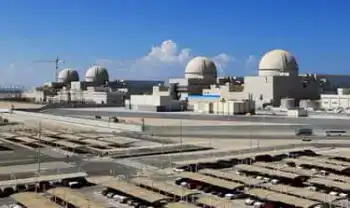
Why Atomic Energy Is Heating Up Again
Substation Relay Protection Training
Our customized live online or in‑person group training can be delivered to your staff at your location.
- Live Online
- 12 hours Instructor-led
- Group Training Available
Nuclear Power Revival drives decarbonization, climate change mitigation, and energy security with SMRs, Generation IV designs, baseload reliability, and policy support, complementing renewables to meet net-zero targets and growing global electricity demand.
What You Need to Know
A global shift back to nuclear energy, leveraging SMRs and advanced reactors to cut emissions and enhance energy security.
SMRs enable scalable, flexible, lower cost nuclear deployment.
Gen IV designs target higher safety, efficiency, and waste reduction.
Baseload reliability complements variable wind and solar generation.
Policy incentives and finance de-risk advanced reactor projects.
Supports climate goals while strengthening national energy security.
In recent years, nuclear power has experienced a remarkable revival in public interest, policy discussions, and energy investment. Once overshadowed by controversies surrounding safety, waste management, and high costs, nuclear energy is now being reexamined as a vital component of the global energy transition, despite recurring questions such as whether it is in decline from some commentators. Here's why nuclear power is "so hot" right now:
1. Climate Change Urgency
One of the most compelling reasons for the renewed interest in nuclear energy is the urgent need to address climate change. Unlike fossil fuels, nuclear power generates electricity with zero greenhouse gas emissions during operation. As countries rush to meet net-zero carbon targets, evidence that net-zero may require nuclear is gaining traction, and nuclear offers a reliable, large-scale alternative to complement renewable energy sources like wind and solar.
2. Energy Security and Independence
Geopolitical tensions and supply chain disruptions have exposed vulnerabilities in relying on imported fossil fuels, and Europe's shrinking nuclear capacity has sharpened concerns over resilience. Nuclear power provides a domestic, stable energy source that can operate independently of volatile global markets. For many nations, this has become a strategic priority, reducing dependence on politically sensitive energy imports.
3. Advances in Technology
Modern innovations in nuclear technology are transforming the industry. Small Modular Reactors (SMRs) are leading the way as part of next-gen nuclear innovation, offering safer, more affordable, and flexible options for nuclear deployment. Unlike traditional large-scale reactors, SMRs can be built faster, scaled to specific energy needs, and deployed in remote or smaller markets.
Additionally, advances in reactor designs, such as Generation IV reactors and fusion research, promise to address longstanding concerns like waste management and safety. For example, some new designs can recycle spent fuel or run on alternative fuels, significantly reducing radioactive waste.
4. Public Perception Is Shifting
Public opinion on nuclear power is also changing. While the industry faced backlash after high-profile incidents like Chernobyl and Fukushima, increasing awareness of climate change and energy security is prompting many to reconsider, including renewed debates such as Germany's potential nuclear return in policy circles. A younger, climate-conscious generation views nuclear energy not as a relic of the past, but as an essential tool for a sustainable future.
5. Renewables Alone Are Not Enough
While renewable energy sources like solar and wind have grown exponentially, their intermittent nature remains a challenge. Energy storage technologies, such as batteries, have not yet matured enough to fully bridge the gap. Nuclear power, with its ability to provide constant, "baseload" energy, as France's fleet demonstrates in practice, serves as an ideal complement to variable renewables in a decarbonized energy mix.
6. Government Support and Investment
Policymakers are taking action to bolster the nuclear sector. Many countries are including nuclear energy in their clean energy plans, offering subsidies, grants, and streamlined regulations to accelerate its deployment. For instance, the United States has allocated billions of dollars to support advanced nuclear projects, the UK's green industrial revolution outlines support for upcoming reactor waves, while Europe has classified nuclear power as "sustainable" under its green taxonomy.
7. Global Energy Demand Is Growing
As populations and economies grow, so does the demand for electricity. Developing nations, in particular, are seeking energy solutions that can support industrialization while limiting environmental impact. Nuclear energy is being embraced as a way to meet these dual objectives, especially in regions with limited access to consistent renewable energy resources.
Challenges Ahead
Despite its potential, nuclear energy is not without its challenges. High upfront costs, lengthy construction timelines, and public concerns over safety and waste remain significant hurdles. The industry will need to address these issues while continuing to innovate and build public trust.
Nuclear power's resurgence is driven by its unique ability to tackle some of the most pressing challenges of our time: climate change, energy security, and the growing demand for electricity. With advances in technology, changing perceptions, and robust policy support, nuclear energy is poised to play a critical role in the global transition to a sustainable and secure energy future.
In a world increasingly shaped by the need for clean and reliable power, nuclear energy has once again become a hot topic—and for good reason.