Synchronous Motors
By Jim Parrish, Lion Oil
VFD Training
Our customized live online or in‑person group training can be delivered to your staff at your location.
- Live Online
- 12 hours Instructor-led
- Group Training Available
Download Our OSHA 4474 Fact Sheet – Establishing Boundaries Around Arc Flash Hazards

- Understand the difference between arc flash and electric shock boundaries
- Learn who may cross each boundary and under what conditions
- Apply voltage-based rules for safer approach distances
Synchronous motors deliver constant speed, high efficiency, and reliable torque for industrial applications. Using AC power and rotor excitation, they enhance performance in pumps, compressors, and conveyors, ensuring energy savings and durable operation.
The Complete Guide to Synchronous Motors
If you want a broader perspective, see our introduction to what a synchronous motor is, which outlines its principles and practical uses. Synchronous motors are commonly designed to operate on three-phase systems, since the rotating magnetic field produced by three phase power provides the stable torque and efficiency required for industrial motor applications.
Electric Motor Testing Training
Request a Free Training Quotation
Types of Synchronous Motors
Synchronous motors are available in several important forms. Wound-field designs use external excitation, enabling flexible power-factor correction. Permanent magnet synchronous motors (PMSMs) use rare-earth magnets, resulting in compact, efficient machines that come with higher costs and some supply chain challenges. Reluctance designs generate torque through rotor saliency, striking a balance between efficiency and affordability. Line-start synchronous motors include damper windings, allowing them to start directly on line power before locking into synchronism.
A good way to think about these designs is in terms of trade-offs:
-
Wound-field – flexible but requires excitation equipment.
-
PMSM – compact and efficient, but higher cost and magnet dependency.
-
Reluctance – cost-effective, lower complexity, moderate efficiency.
-
Line-start – easier starting, less control flexibility.
Synchronous vs Induction Motors
Induction motors remain popular in industry for their ruggedness and simplicity, yet they often create lagging power factor issues that demand correction with capacitor banks. Synchronous motors not only avoid slip losses but also actively improve system power factor when properly excited. Many industries still rely heavily on induction machines, and our resource on what is an induction motor explains why they remain so widely used.
Sign Up for Electricity Forum’s Motors and Drives Newsletter
Stay informed with our FREE Motors and Drives Newsletter — get the latest news, breakthrough technologies, and expert insights, delivered straight to your inbox.
One real-world example of synchronous motors is the Lion Oil Refinery in Arkansas. To meet stricter clean-air regulations, the refinery replaced large induction motors with synchronous machines for driving the hydrogen compressors. The switch reduced reactive loading, improved energy efficiency, and lowered overall operating costs, while maintaining compliance with emissions regulations. Improving reliability and lowering costs often begins with proactive care, which is why efficiency opportunities through motor maintenance are so important.
Efficiency and Losses
Every motor has losses, but the profile differs in synchronous machines. Copper losses occur in the stator and rotor windings, iron losses occur in the core, and friction, windage, and stray losses also contribute. Because they operate in step with the supply frequency, synchronous motors avoid the slip losses found in induction designs, which means they maintain efficiency even at partial loads.
In efficiency curves, this translates to stable performance across a wide range of loads. At low speeds and high torques, where induction motors often struggle, synchronous motors continue to deliver reliable output. For applications that require flexible speed control, a VFD variable frequency drive can be paired with synchronous or induction motors to maximize performance.
Applications in Industry
Synchronous motors serve industries that require constant speed, reliable torque, and precise power factor control. They are widely used in refineries, cement plants, steel mills, paper production, and water treatment facilities. Applications include driving pumps, crushers, compressors, and conveyors, where performance consistency is essential. With PMSM and reluctance designs advancing, they are also finding roles in high-efficiency HVAC systems, renewable energy integration, and robotics.
Applications of Synchronous Motors
| Industry | Typical Applications | Key Benefits | Common Motor Types |
|---|---|---|---|
| Refineries & Petrochemicals | Hydrogen compressors, pumps, fans | Power factor correction, constant speed, efficiency | Wound-field, PMSM |
| Cement Plants | Crushers, mills, conveyors | High torque at low speed, reliable operation | Synchronous reluctance, wound-field |
| Steel Mills | Rolling mills, blast furnace blowers | Precise speed control, durability | Line-start, wound-field |
| Pulp & Paper | Digesters, refiners, large fans | Energy savings, stable speed | PMSM, synchronous reluctance |
| Water & Wastewater | High-capacity pumps, aerators | Reduced reactive loading, efficiency curves hold under partial load | Wound-field, line-start |
| HVAC & Building Systems | Chillers, large fans, compressors | Compact design, energy efficiency | PMSM, synchronous reluctance |
| Renewable Energy | Wind turbines, hydro generators | Grid synchronization, efficiency, reliability | PMSM, brushless synchronous |
Design Considerations
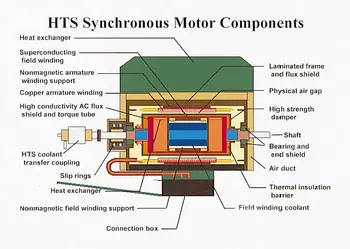
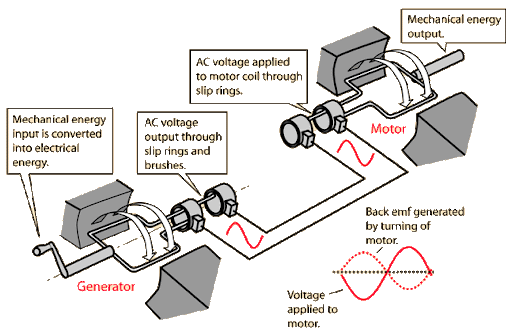
The performance of synchronous motors depends on their internal design. Rotor and stator geometry, pole count, and slot structure affect torque ripple and acoustic noise. Materials for insulation and windings determine the durability, while cooling methods — ranging from forced air to liquid cooling — protect the motor during continuous, heavy-duty operation. Engineers weigh these factors when selecting motors for specific applications such as mills, crushers, and conveyors. Understanding that an electric motor transforms potential energy into mechanical energy is fundamental to grasping how synchronous machines fit into industrial systems.
EF Partner Media
 How Circuit Breaker Monitoring Helps Detect Problems Before Failure
Article
How Circuit Breaker Monitoring Helps Detect Problems Before Failure
Article
 Learn How An Electric Motor Transforms Potential Energy Into Mechanical Energy
Catalog
Learn How An Electric Motor Transforms Potential Energy Into Mechanical Energy
Catalog
 EasyPower 138-page Practical Solution Guide To Arc Flash Hazards, Third Edition
Product
EasyPower 138-page Practical Solution Guide To Arc Flash Hazards, Third Edition
Product
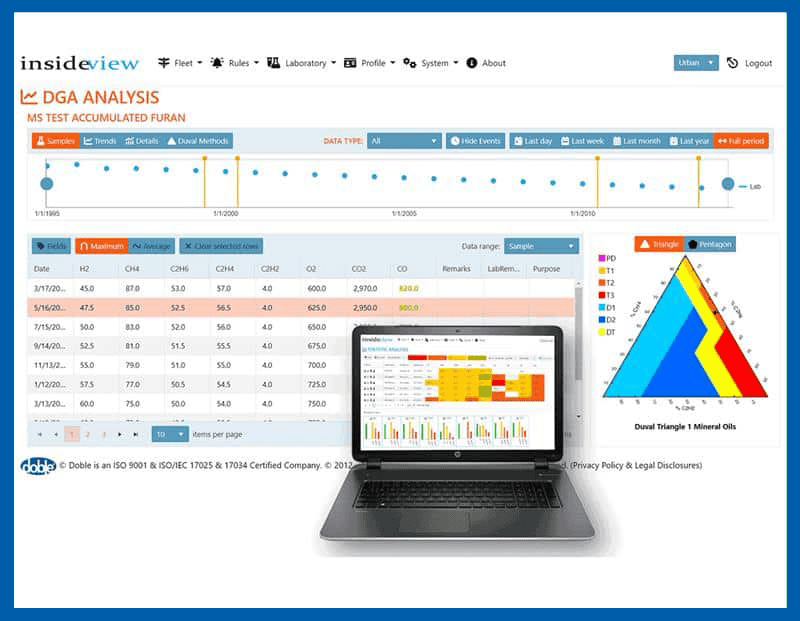 INSIDEVIEW - Enterprise Intelligence to Drive Predictive Maintenance
Control and Startup
One challenge with synchronous motors is that they cannot self-start. To overcome this, engineers use auxiliary systems such as pony motors, damper windings, or, increasingly, variable-frequency drives (VFDs), which provide smooth ramp-up and flexible control. Once the motor reaches near-synchronous speed, excitation locks the rotor to the stator field.
Modern controls add even more flexibility. Flux-weakening techniques enable motors to operate above their base speed, while advanced sensors and controllers ensure stable operation in demanding processes.
Standards and Efficiency Ratings
Synchronous motors play a central role in global efficiency initiatives. The IEC classifies motors from IE1 to IE5, while NEMA Premium ratings set benchmarks in North America. Higher classes, especially IE4 and IE5, are driving greater use of PMSMs and reluctance designs. Compliance with these standards is not only a regulatory requirement in many regions but also an opportunity for companies to reduce long-term costs through higher efficiency. ecause energy costs dominate motor ownership, our article on electric motor efficiency shows how design and operation affect long-term savings.
Cost, Lifecycle, and Maintenance
Although synchronous motors have higher initial costs, they often outperform induction motors over the lifecycle. Their ability to correct power factor reduces penalties and reduces the need for auxiliary equipment, while their efficiency lowers energy bills year after year.
Maintenance varies by design. Brush-type motors require inspections of brushes and slip rings, while brushless PMSMs reduce servicing needs but still require checks of bearings and insulation. When factored into lifecycle analysis, many industries find synchronous motors provide the best balance of performance, efficiency, and cost.
Challenges and Limitations
Synchronous motors are not a universal solution. Their starting requirements increase system complexity, and the need for excitation equipment or advanced controls can drive up costs. In designs that utilize rare-earth magnets, environmental and supply chain risks also play a significant role. For highly variable-speed applications, induction motors may remain the better option due to their simpler construction and adaptability.
Electricity Today T&D Magazine Subscribe for FREE
- Timely insights from industry experts
- Practical solutions T&D engineers
- Free access to every issue
Frequently Asked Questions
What are the main challenges in starting synchronous motors?
They require external methods, such as pony motors or variable frequency drives, to reach near-synchronous speed before excitation can lock the rotor in.
How do synchronous motors compare in cost to induction motors?
While purchase costs are higher, their efficiency, torque stability, and ability to correct power factor often reduce long-term operating expenses.
What industries benefit most from synchronous motors?
They are commonly used in refineries, steel mills, cement plants, and paper production facilities, where constant speed, high torque, and efficiency are crucial.
What maintenance considerations apply to synchronous motors?
Brush designs need regular inspection of brushes and slip rings, while brushless motors reduce maintenance but still require checks of bearings and insulation.
How do synchronous motors support power factor correction?
By adjusting rotor excitation of synchronous motors, they can operate at a lagging, leading, or unity power factor, thereby reducing reactive power and stabilizing the plant's electrical systems.
Related Articles
