SDG&E Wants More Money From Customers Who Don’t Buy Much Electricity. A Lot More.

NFPA 70E Training
Our customized live online or in‑person group training can be delivered to your staff at your location.

- Live Online
- 6 hours Instructor-led
- Group Training Available
SDG&E Minimum Bill Proposal would impose a $38.40 fixed charge, discouraging rooftop solar, burdening low income households, and shifting grid costs during peak demand, as the CPUC weighs consumer impacts and affordability.
Essential Takeaways
Sets a $38.40 monthly minimum bill that raises low usage costs, deters rooftop solar, and burdens low income households.
$38.40 monthly minimum bill for most residential customers
Low-usage and low-income customers face higher effective rates
Deters rooftop solar adoption and conservation investments
Grid costs driven by peak demand, not uniform fixed access fees
CPUC reviewing proposal amid consumer advocacy and equity concerns
The utility San Diego Gas & Energy has an aggressive proposal pending before the California Public Utilities Commission, amid recent commission changes in San Diego that highlight how regulatory decisions affect local customers: It wants to charge most residential customers a minimum bill of $38.40 each month, regardless of how much energy they use. The costs of this policy would hit low-income customers and those who generate their own energy with rooftop solar. We’re urging the Commission to oppose this flawed plan—and we need your help.
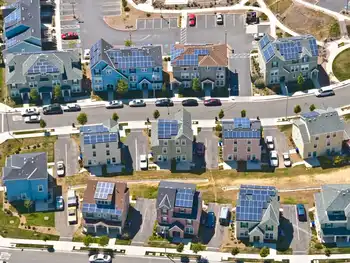
SDG&E’s proposal is bad news for sustainable energy. About half of the customers whose bills would go up under this proposal have rooftop solar. The policy would deter other customers from investing in rooftop solar by making these investments less economical. Ultimately, lost opportunities for solar would mean burning more gas in polluting power plants.
The proposal is also bad news for people who already have to scrimp on energy costs. Most customers with big homes and billowing air conditioners won't notice if this policy goes into effect, because they use at least $38 worth of electricity a month anyway. But for households that don’t buy much electricity from the company, including those in small apartments without air conditioning, this proposal would raise the bills. Even for customers on special low-income rates, amid electric bill changes statewide, SDG&E wants a minimum bill of $19.20.
Penalizing customers who don’t use much electricity would disproportionately hurt lower-income customers, raising energy equity concerns across the region, who tend to use less energy than their wealthier neighbors. In the region SDG&E serves, the average family in an apartment uses half as much electricity as a single-family residence. Statewide, low-income households are more than four times as likely to be low-usage electricity customers than high-income households. When it gets hot, residential electricity patterns are often driven by air conditioning. The vast majority of SDG&E's customers live in the coastal climate zone, where access to air conditioning is strongly linked to income: Households with incomes over $150,000 are more than twice as likely to have air conditioning than families making less than $35,000, with significant racial disparities in who has AC.
In its attempt to rationalize its request, SDG&E argues that it should charge everyone for infrastructure costs that do not depend on how much energy they use. But the cost of the grid is driven by how much energy SDG&E delivers on hot summer afternoons, when some customers blast their AC and demand for electricity peaks. If more customers relied on their own solar power or conserved energy, the utility would spend less on its grid and help rein in soaring electricity prices over time.
In the long term, reducing incentives to go solar and conserve energy will strain the grid and drive up costs for everyone, especially as lawmakers may overturn income-based charges and reshape rate design. SDG&E's arguments are part of a standard utility playbook for trying to hike income-based fixed charges, and consumer advocates have repeatedly shut them down. As far as we know, no regulators in the country have allowed a utility to charge customers over $38 for the “privilege” of accessing electric service.