New Orleans Levees Withstood Hurricane Ida as Electricity Failed

Substation Relay Protection Training
Our customized live online or in‑person group training can be delivered to your staff at your location.
- Live Online
- 12 hours Instructor-led
- Group Training Available
Hurricane Ida New Orleans Infrastructure faced a split outcome: levees and pumps protected against storm surge, while the power grid collapsed as transmission lines failed, prompting large-scale restoration efforts across Louisiana and Mississippi.
Understanding the Story
It summarizes Ida's impact: levees and pumps held, but the power grid failed, causing outages and slow restoration.
Levees and pumps held, averting catastrophic surge flooding.
All 8 transmission lines feeding New Orleans failed.
1.2 million customers lost power across LA and MS.
Restoration may take days to weeks; 25,000+ workers mobilized.
Sewer stations lost power; residents urged to conserve water.
Infrastructure in the city of New Orleans turned in a mixed performance against the fury of Hurricane Ida, with the levees and pumps warding off catastrophic flooding even as the electrical grid, part of the broader Louisiana power grid, failed spectacularly.
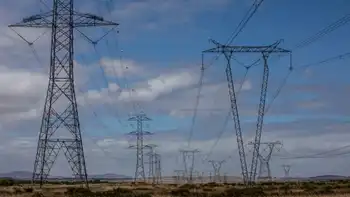
Ida’s high winds, measuring 150 miles (240 kilometers) an hour at landfall, took out all eight transmissions lines that deliver power into New Orleans, ripped power poles in half and crumpled at least one steel transmission tower into a twisted metal heap, knocking out electricity to all of the city. A total of more than 1.2 million homes and businesses in Louisiana and Mississippi lost power. While about 90,000 customers were reconnected by Monday afternoon, many could face days without electricity, and frustration can mount as seen during the Houston outage after major storms.
In contrast, the New Orleans area’s elaborate flood defenses seem to have held up, a vindication of the Army Corps of Engineers’ $14.5 billion project to rebuild levees, flood gates and pumps in the wake of the devastation wrought by Hurricane Katrina in 2005. While there were reports of scattered deaths tied to Ida, the city escaped the kind of flooding that destroyed entire neighborhoods in Katrina’s wake, left parts of the city uninhabitable for months and claimed 1,800 lives.
“The situation in New Orleans, as bad as it is today with the power, could be so much worse,” Louisiana Governor John Bel Edwards said Monday on the Today Show, praising the levee system’s performance. “All you have to do is go back 16 years to get a glimpse of what that would have been like.”
While the levees’ resiliency is no doubt due to the rebuilding effort that followed Katrina, the starkly different outcomes also stems from the storms’ different characteristics. Katrina slammed the coast with a 30-foot storm surge of ocean water, while preliminary estimates from Ida put its surge far lower.
Ida’s winds, however, were stronger than Katrina’s, and that’s what ultimately took out so many power lines, a dynamic that also saw Texas utilities struggle during Harvey. Deanna Rodriguez, the chief executive officer of power provider Entergy New Orleans, declined to comment on when service would be restored, saying the company was using helicopters and drones to help assess the damage.
Michael Webber, an energy and engineering professor at the University of Texas at Austin, estimated power restoration will take days and possibly weeks, a pattern seen in Florida restoration timelines after major hurricanes, based on the initial damage reports from the storm. More than 25,000 workers from at least 32 states and Washington are mobilized to assist with power restoration efforts, similar to FPL's massive response after Irma, according to the Edison Electric Institute.
“The question is, how long will it take to rebuild these lines,” Webber said. The utilities will first need to complete their damage assessments before they can get a sense of repair timelines, a step that Gulf Power crews have highlighted in past recoveries, he said. “You can imagine that will take days at least, possibly weeks.”
The loss of electricity will have other affects as well, and even though grid resilience during the pandemic was strong, local systems face immediate constraints. Sewer substations, for example, need electricity to keep wastewater moving, said Ghassan Korban, executive director of the New Orleans Sewerage & Water Board. The storm knocked out power to about 80 of the city’s 84 pumping stations, he said at a Monday press conference. “Without electricity, wastewater backs up and can cause overflows,” he said, adding that residents should conserve water to lessen stress on the system.