McMaster Training Next Gen Nuclear Professionals
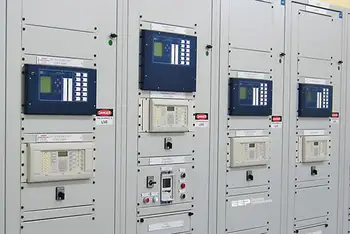
Protective Relay Training - Basic
Our customized live online or in‑person group training can be delivered to your staff at your location.
- Live Online
- 12 hours Instructor-led
- Group Training Available
McMaster University is expanding its nuclear training programs to prepare engineers, researchers, and medical specialists to address a global shortage of skilled professionals. New partnerships, hands-on reactor experience and international education initiatives are strengthening Canada’s capacity for future nuclear growth.
At A Glance
• McMaster expands nuclear training to meet rising global workforce demand.
• Hands-on reactor and lab programs draw students and international professionals.
• Partnership with CNL extended to support long-term nuclear skills development.
• Growing isotope production strengthens Canada’s nuclear medicine leadership.
McMaster University is Leading Nuclear Hub
McMaster University is positioning itself as one of Canada’s leading hubs for nuclear training and research, expanding programs that prepare students and professionals for careers across a rapidly changing nuclear sector. The university’s 5MW McMaster Nuclear Reactor anchors a suite of specialized research facilities that provide hands-on experience in reactor operations, radiation safety, and nuclear medicine.
The renewed interest in nuclear workforce development mirrors the ambitions outlined in Canadian Nuclear Initiative, which calls for expanded training and infrastructure to meet growing demand.
A group of 15 women from around the world recently visited McMaster as part of the Lise Meitner Programme, a training initiative for women in nuclear. Over the weeklong session, participants engaged in exercises involving neutron activation analysis, emergency preparedness, and hot-cell manipulation. “Nuclear needs more women, and career development opportunities like the IAEA LMP give women professionals the hands-on experience they need to make a difference in the nuclear sector,” said Karin Stephenson, Director of Nuclear Research and Education Support.
McMaster’s training programs arrive at a pivotal moment as Ontario officially breaks ground on its first small modular reactor project, highlighted in Ontario Breaks Ground on First Small Modular Nuclear Reactor, underlining the province’s nuclear resurgence.
The university also hosts the CNL Nuclear Undergraduate Research Experience, launched in 2023 to allow engineering and science students to work alongside experts in Chalk River and at McMaster’s own labs. John Preston, McMaster’s Acting Associate Vice-President, Nuclear, praised the program’s success. “This programme has provided key learning, research and mentorship opportunities for some of McMaster’s brightest and most passionate students in nuclear science and engineering.”
McMaster’s role in medical isotope production has further strengthened its training mandate. Twenty-seven graduate students and early-career professionals gathered at the university in spring 2025 for the Next Generation in Nuclear Medicine workshop, where experts taught radiation safety, isotope production and molecular imaging. “We were honoured to host so many talented young leaders,” said Raluca Petria, Manager, Nuclear Outreach and Education.
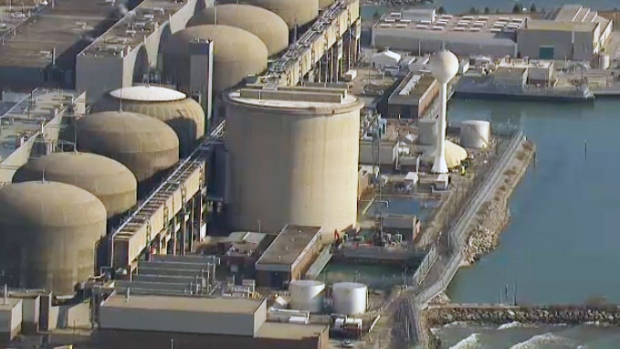
The long-term reactor refurbishment plan at Pickering, covered in Pickering NGS Refurbishment, underscores why universities like McMaster must supply a pipeline of trained nuclear professionals ready for major maintenance and revitalization efforts.
To meet the national talent shortage, McMaster has expanded enrolment in Engineering Physics and launched a new minor in Nuclear Studies and Society, which filled all 150 seats in its first week. Preston says the university is embracing a national responsibility to help build Canada’s future nuclear workforce.
Related Articles