India's electricity demand falls at the fastest pace in at least 12 years
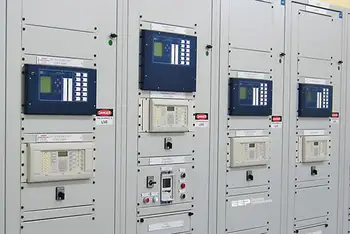
Protective Relay Training - Basic
Our customized live online or in‑person group training can be delivered to your staff at your location.
- Live Online
- 12 hours Instructor-led
- Group Training Available
India Industrial Output Slowdown deepens as power demand slumps, IIP contracts, and electricity, manufacturing, and mining weaken; capital goods plunge while RBI rate cuts struggle to lift GDP growth, infrastructure, and fuel demand.
At a Glance
A downturn where IIP contracts as power demand, manufacturing, mining, and capital goods fall despite RBI rate cuts.
October power demand fell at the fastest pace in 12 years.
IIP contracted 4.3% in Sept, pointing to weak industrial activity.
Electricity is 8% of IIP; infra output fell 5.2%, worst in 14 years.
RBI cut rates 135 bps, but stimulus beyond monetary policy is urged.
India's power demand fell at the fastest pace in at least 12 years in October, signalling a continued decline in the industrial output, mirroring how China's power demand dropped when plants were shuttered, according to government data. Electricity has about 8% weighting in the country's index for industrial production.
India needs electricity to fuel its expanding economy and has at times rationed coal supplies when demand surged, but a third decline in power consumption in as many months points to tapering industrial activity in a nation that aims to become a $5 trillion economy by 2024.
India's industrial output fell at the fastest pace in over six years in September, adding to a series of weak indicators that suggests that the country’s economic slowdown is deep-rooted and interest rate cuts alone may not be enough to revive growth.
Annual industrial output contracted 4.3% in September, government data showed on Monday. It was the worst performance since a 4.4% contraction in February 2013, according to Refinitiv data.
Analysts polled by Reuters had forecast industrial output to fall 2% for the month.
“A contraction of industrial production by 4.3% in September is serious and indicative of a significant slowdown as both investment and consumption demand have collapsed,” said Rupa Rege Nitsure, chief economist of L&T Finance Holdings.
The industrial output figure is the latest in a series of worrying economic data in Asia's third largest economy, which is also the world's third-largest electricity producer as well.
Economists say that weak series of data could mean economic growth for July-September period will remain near April-June quarter levels of 5%, which was a six-year low, and some analysts argue for rewiring India's electricity to bolster productivity. The Indian government is likely to release April-September economic growth figures by the end of this month.
Subdued inflation and an economic slowdown have prompted the Reserve Bank of India (RBI) to cut interest rates by a total of 135 basis points this year, while coal and electricity shortages eased in recent months.
“These are tough times for the RBI, as it cannot do much about it but there will be pressures on it to act ...Blunt tools like monetary policy may not be effective anymore,” Nitsure said.
Data showed in September mining sector fell 8.5%, while manufacturing and electricity fell 3.9% and 2.6% respectively, even as imported coal volumes rose during April-October. Capital goods output during the month fell 20.7%, indicating sluggish demand.
“IIP (Index of Industrial Production) growth in October 2019 is also likely to be in negative territory and only since November 2019 one can expect mild IIP expansion, said Devendra Kumar Pant, Chief Economist and Senior Director, Public Finance, India Ratings & Research (Fitch Group).
Infrastructure output, which comprises eight main sectors, in September showed a contraction of 5.2%, the worst in 14 years, even as global daily electricity demand fell about 15% during pandemic lockdowns.
India's fuel demand fell to its lowest in more than two years in September, with consumption of diesel to its lowest levels since January 2017. Diesel and gasoline together make up over 7.4% of the IIP weightage.
In 2019/20 India's fuel demand — also seen as an indicator of economic and industrial activity — is expected to post the slowest growth in about six years.