Buyer's Remorse: Questions about grid modernization affordability
High Voltage Maintenance Training Online
Our customized live online or in‑person group training can be delivered to your staff at your location.
- Live Online
- 12 hours Instructor-led
- Group Training Available
Grid Modernization drives utilities to integrate DER, AMI, and battery storage while balancing reliability, safety, and affordability; regulators pursue cost-benefit analyses, new rate design, and policy actions to guide investment and protect customer-owned resources.
The Situation Explained
Upgrading the grid to manage DER with digital tools, while maintaining reliability, safety, and customer affordability.
Key tools: AMI, DERMS, BTM storage, EV integration, advanced sensing.
PUCs require grid investment cost-benefit studies and transparent plans.
Modernization enables DER hosting while protecting safety and reliability.
Policy trends: AMI rollouts, storage, and rate designs for customer DERs.
Utilities’ pursuit of a modern grid, including the digital grid concept, to maintain the reliability and safety pillars of electricity delivery has raised a lot of questions about the third pillar — affordability.
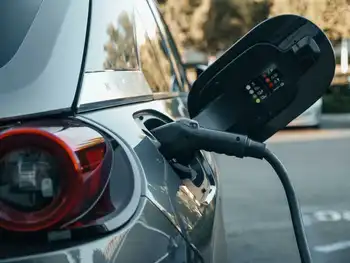
Utilities are seeing rising penetrations of emerging technologies, highlighted in recent grid edge trends reports, like distributed solar, behind-the-meter battery storage, and electric vehicles. These new distributed energy resources (DER) do not eliminate utilities' need to keep distribution systems safe and reliable.
But the need for modern tools to manage DER imposes costs on utilities, prompting calls to invest in smarter infrastructure even as some regulators, lawmakers and policymakers are concerned those costs could drive up electricity rates.
The result is an increasing number of legislative and regulatory grid modernization actions aimed at identifying what is necessary to serve the coming power sector transformation and address climate change risks across the grid.
The rise of grid modernization
Grid modernization, which is supported by both conservatives and distributed energy resources advocates, got a lot of attention last year. According to the 2017 review of grid modernization policy by the North Carolina Clean Energy Technology Center (NCCETC), 288 grid modernization policy actions were proposed, pending or enacted in 39 states.
These numbers from NCCETC's first annual review of policy activity set a benchmark against which future years' activity can be measured.
The most common type of state actions, by far, were those that focused on the deployment of advanced metering infrastructure (AMI) and battery energy storage. Those are two of the 2017 trends identified in NCCETC’s 50 States of Grid Modernization report. But deployment of those technologies, while foundational to an updated grid, only begins to prepare distribution systems for the coming power sector transformation.
Bigger advances, including the newest energy system management tools, are being held back by 2017’s other policy actions requiring more deliberation and fact-finding, even as grid vulnerability report cards underscore the risks that modernization seeks to mitigate.
Utilities’ proposals to more fully prepare their grids to deliver 21st century technologies are being met with questions about completeness and cost.
Utilities are being asked to address these questions in comprehensive, public utility commission-led cost-benefit analyses and studies. This is also one of NCCETC’s top 2017 policy action trends for grid modernization. The outcome to date appears to be an increased, but still incomplete, understanding of what is needed to build a 21st century grid.
Among the top objectives of those driving the policy actions are resolving questions about private sector participation in grid modernizaton buildouts and developing new rate designs to protect and support customer-owned distributed energy resources. Actions on those topics are also on NCCETC’s list of 2017 policy trends.
Altogether, the trend list is dominated by actions that do not lead to completion of grid modernization but to more work on it.