We Need a Total Fossil Fuel Lockdown for a Climate Revolution
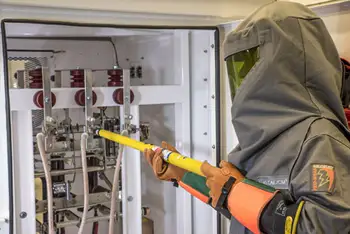
High Voltage Maintenance Training Online
Our customized live online or in‑person group training can be delivered to your staff at your location.
- Live Online
- 12 hours Instructor-led
- Group Training Available
Renewables 2020 Global Status Report highlights renewable energy gaps beyond power, urging decarbonization in heating, cooling, and transport, greener COVID-19 recovery, market reforms, and rapid energy transition to cut CO2 emissions and fossil fuel dependence.
Story Summary
REN21's annual report on renewable energy progress and policy gaps across power, heating, cooling, and transport.
Decarbonize heating, cooling, and transport to cut CO2 and fuel use
Leverage green COVID-19 recovery; reform markets and end fossil support
Renewables now supply over 30% of global electricity generation
Total final energy demand rising; renewables just 11% in 2018
Scale efficiency, PPAs, and 100% renewable targets across all sectors
Growth in renewable power has been impressive over the past five years, with over 30% of global electricity now coming from renewables worldwide. But too little is happening in heating, cooling and transport. Overall, global hunger for energy keeps increasing and eats up progress, according to REN21's Renewables 2020 Global Status Report (GSR), released today. The journey towards climate disaster continues, unless we make an immediate switch to efficient and renewable energy in all sectors in the wake of the COVID-19 pandemic.
"Year after year, we report success after success in the renewable power sector. Indeed, renewable power has made fantastic progress. It beats all other fuels in growth and competitiveness. Many national and global organisations already cry victory. But our report sends a clear warning: The progress in the power sector is only a small part of the picture. And it is eaten up as the world's energy hunger continues to increase. If we do not change the entire energy system, we are deluding ourselves," says Rana Adib, REN21's Executive Director.
The report shows that in the heating, cooling and transport sectors, the barriers are still nearly the same as 10 years ago. "We must also stop heating our homes and driving our cars with fossil fuels," Adib claims.
There is no real disruption in the COVID-19 pandemic
In the wake of the extraordinary economic decline due to COVID-19, the IEA predicts energy-related CO2 emissions are expected to fall by up to 8% in 2020. But 2019 emissions were the highest ever, and the relief is only temporary. Meeting the Paris targets would require an annual decrease of at least 7.6% to be maintained over the next 10 years, and UN analysis on NDC ambition underscores the need for faster action. Says Adib: "Even if the lock-downs were to continue for a decade, the change would not be sufficient. At the current pace, with the current system and current market rules, it would take the world forever to come anywhere near a no-carbon system."
"Many recovery packages lock us into a dirty fossil fuel economy"
Recovery packages offer a once-in-a-lifetime chance to make the shift to a low-carbon economy, and green energy investments could accelerate COVID-19 recovery. But according to Adib there is a great risk for this enormous chance to be lost. "Many of these packages include ideas that will instead lock us further into a dirty fossil fuel system. Some directly promote natural gas, coal or oil. Others, though claiming a green focus, build the roof and forget the foundation," she says. "Take electric cars and hydrogen, for example. These technologies are only green if powered by renewables."
Choosing an energy system that supports job creation and social justice
The report points out that "green" recovery measures, such as investment in renewables and building efficiency, are more cost-effective than traditional stimulus measures and yield more returns. It also documents that renewables deliver on job creation, energy sovereignty, accelerated energy access in developing countries, and clean, affordable and sustainable electricity for all objectives worldwide, alongside reduced emissions and air pollution.
"Renewables are now more cost-effective than ever, and recent IRENA analysis shows their potential to decarbonise the energy sector, providing an opportunity to prioritize clean economic recovery packages and bring the world closer to meeting the Paris Agreement Goals. Renewables are a key pillar of a healthy, safe and green COVID-19 recovery that leaves no one behind," said Inger Andersen, Executive Director of the UN Environment Programme (UNEP). "By putting energy transition at the core of economic recovery, countries can reap multiple benefits, from improved air quality to employment generation."
This contrasts with the true cost of fossil fuels, estimated to be USD 5.2 trillion if costs of negative impacts such as air pollution, effects of climate change, and traffic congestion are counted.
Renewable energy systems support energy sovereignty and democracy, empowering citizens and communities, instead of big fossil fuel producers and consumers. "When spending stimulus money, we have to decide: Do we want an energy system that serves some or a system that serves many?", says Adib. "But it's not only about money. We must end any kind of support to the fossil economy, particularly when it comes to heating, cooling and transport. Governments need to radically change the market conditions and rules and demonstrate the same leadership as during the COVID-19 pandemic."



The report finds:
Total final energy demand continues to be on the rise (1.4% annually from 2013 to 2018). Despite significant progress in renewable power generation, the share of renewables in total final energy demand barely increased (9.6% in 2013 to 11% in 2018). Compared to the power sector, the heating, cooling and transport sectors lag far behind (renewable energy share in power, 26%, heating and cooling, 10%, transport, 3%).
Today's progress is largely the result of policies and regulations initiated years ago and focus on the power sector. Major barriers seen in heating, cooling and transport are still almost the same a decade on. Policies are needed to create the right market conditions.
The renewable energy sector employed around 11 million people worldwide in 2018
In 2019, the private sector signed power purchase agreements (PPAs) for a record growth of over 43% from 2018 to 2019 in new renewable power capacity.
The global climate strikes have reached unprecedented levels with millions of people across 150 countries. They have pushed governments to step up climate ambitions. As of April 2020, 1490 jurisdictions - spanning 29 countries and covering 822 million citizens - had issued "climate emergency" declarations, many of which include plans and targets for more renewable-based energy systems.
While some countries are phasing out coal, examples such as Europe's green surge show how renewables can soar as emissions fall, yet others continued to invest in new coal-fired power plants. In addition, funding from private banks for fossil fuel projects has increased each year since the signing of the Paris Agreement, totaling USD 2.7 trillion over the last three years.
"It is clear, renewable power has become mainstream and that is great to see. But the progress in this one sector should not lead us to believe that renewables are a guaranteed success. Governments need to take action beyond economic recovery packages. They also need to create the rules and the environment to switch to an efficient and renewables-based energy system, and action toward 100% renewables is urgently needed worldwide. Globally. Now." concludes Arthouros Zervos, President of REN21.