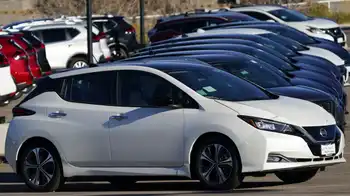
Use of electric vehicles associated with fewer asthma-related ER visits on a local level, study shows

Protective Relay Training - Basic
Our customized live online or in‑person group training can be delivered to your staff at your location.

- Live Online
- 12 hours Instructor-led
- Group Training Available
Electric Vehicle Adoption Benefits include reduced air pollution, lower greenhouse gas emissions, and improved respiratory health, as regional studies show, with equity considerations for low-income communities and policy mandates accelerating zero-emission vehicles.
Top Insights
The environmental and health gains from wider EV uptake, including cleaner air, lower emissions, and fewer asthma cases.
California data links higher EV share to lower NO2, PM2.5, and asthma ER visits.
Lifecycle GHGs are below ICE cars, even with 18% fossil power in Canada.
Canada targets 20% EV sales by 2026 and 100% by 2035; feasibility debated.
Adoption lags in low income areas, risking inequitable health co-benefits.
In an effort to mitigate the effects of climate change, countries across the globe are involving electric vehicles in their plans to reduce greenhouse gas emissions, citing the EV climate and cost benefits highlighted by recent analyses.
A federal mandate in Canada, for instance, aims to ensure that one-fifth of all passenger cars, SUVs and trucks sold in Canada are electrically-powered by 2026, with Ottawa set to release EV sales regulations to guide industry. By 2035, if this mandate is carried out, every passenger vehicle sold in Canada will need to be electric, though some critics deem the 2035 target unrealistic based on current conditions.
But what will this shift to electric vehicles actually do for the environment, especially given that 18% of Canada's 2019 electricity came from fossil fuels which affects lifecycle emissions?
One team of researchers with the Keck School of Medicine of USC aimed to find out, conducting what it describes as one of the first studies to analyze the environmental and health impacts of electric vehicles on a regional scale. Their research linked the wider integration of zero-emission vehicles with lower levels of local air pollution and some respiratory problems, a pattern consistent with analyses showing EVs are greener across all 50 states in the U.S.
“When we think about the actions related to climate change, often it’s on a global level,” Erika Garcia, an assistant professor of population and public health at the Keck School of Medicine, said in a press release.
“But the idea that changes being made at the local level can improve the health of your own community could be a powerful message to the public and to policy makers.”
Using data that spanned from 2013 to 2019, Garcia and the team of researchers compared the registration of zero-emissions vehicles with air pollution levels and asthma-related emergency room visits in California. They found that in regions where more electric vehicles were adopted, emergency room visits dropped, along with with pollution levels.
Sandrah Eckel, an associate professor of population and public health sciences and the study’s senior author, said their findings offer hope among a reality of climate anxieties.
“We’re excited about shifting the conversation towards climate change mitigation and adaptation, and these results suggest that transitioning to [electric vehicles] is a key piece of that.”
Garcia added that the study also evaluated disadvantages faced by those living in lower-income communities, which often see higher pollution levels and related respiratory problems, underscoring that EVs are not a silver bullet in broader climate and health policy.
Researchers discovered that adoption of zero-emissions vehicles in low-resource neighbourhoods was slower compared to more affluent areas, amid ongoing debate over whether EV purchase subsidies are an effective tool for Canada.
The study attributes this disparity to what the researchers call an “adoption gap” – referring to groups of people that cannot afford newer vehicles that are electrically-powered.
According to the study, which was published in the journal Science of the Total Environment, the adoption gap “threatens the equitable distribution of possible co-benefits.”
“Should continuing research support our findings, we want to make sure that those communities that are overburdened with traffic-related air pollution are truly benefiting from this climate mitigation effort,” Garcia said in the release.