Electrical Safety Regulations Examined
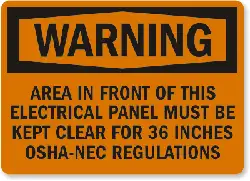
NFPA 70E Training
Our customized live online or in‑person group training can be delivered to your staff at your location.
- Live Online
- 6 hours Instructor-led
- Group Training Available
Download Our OSHA 4474 Fact Sheet – Establishing Boundaries Around Arc Flash Hazards
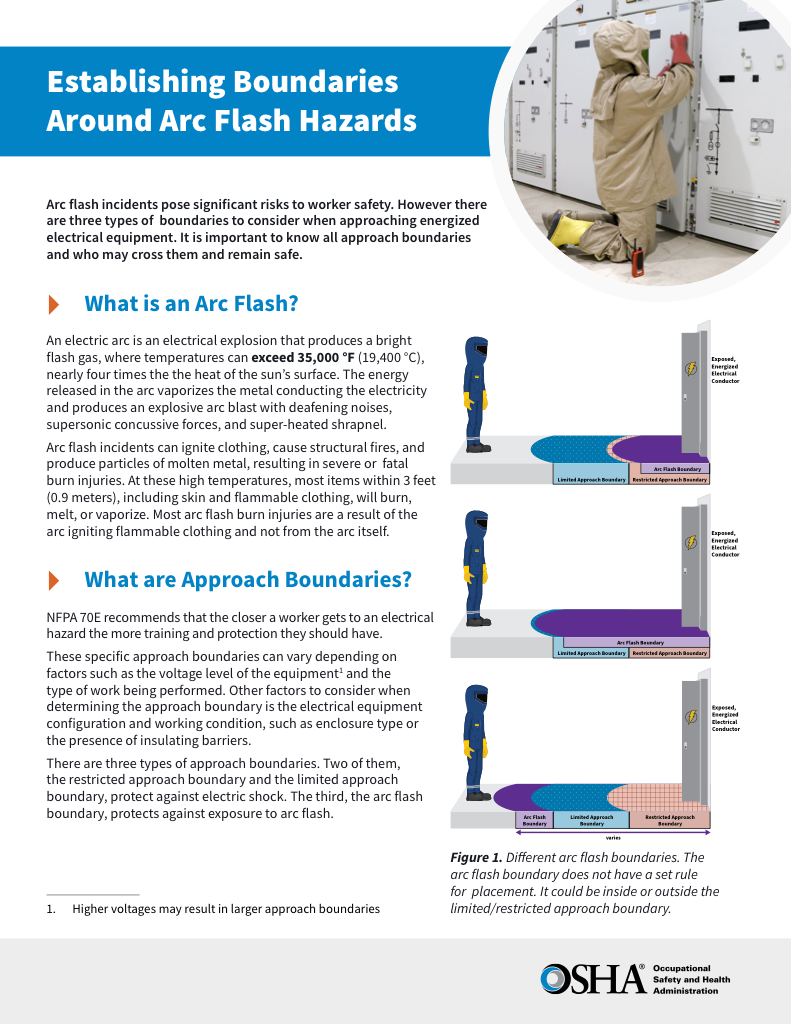
- Understand the difference between arc flash and electric shock boundaries
- Learn who may cross each boundary and under what conditions
- Apply voltage-based rules for safer approach distances
Electrical safety regulations set standards and codes for compliance, risk assessment, grounding, arc-flash protection, PPE, lockout-tagout, and inspection, ensuring safe design, installation, operation, and maintenance in electrical engineering through hazard analysis and periodic testing.
Understanding Electrical Safety Regulation
All three levels of government govern electrical safety regulations—federal, state/provincial, and municipal. They set regulations, laws and acts that relate to electrical health and safety and other work-related practices. These electrical safety regulations are based on the U.S. National Electrical Code and the Canadian Standards Association's Canadian Electrical Code Part 1 (CEC) as models for regulation. (There are Ontario amendments). In Ontario, compliance guidance is further detailed in the Ontario Electrical Safety Code, which outlines jurisdiction-specific practices and inspections.
The National Electrical Code (NEC) is a standard developed by the National Fire Protection Association (NFPA) Committee on the National Electrical Code. This committee comprises 19 code-making panels, as well as a national technical coordinating committee that coordinates among the panels. The NEC is approved as an American national standard by the American National Standards Institute (ANSI). It is formally identified as ANSI/NFPA 70. In federal contexts, OSHA interpretations clarify that OSHA’s electrical standards are based on NFPA 70 and related consensus codes when assessing employer programs and abatement methods.
CE Code
The Canadian Electrical Code serves as the basis for wiring regulations across Canada. Generally, provincial legislation adopts the CEC by reference, sometimes with provincial amendments that tailor it to local conditions. These amendments may be administrative in nature or technical content specific to the region. Since the Code is a copyrighted document produced by a private body, it may not be distributed without the CSA Group's permission. To support compliant implementation, many organizations distill code obligations into electrical safety manuals that inform training, procedures, and documentation.
Sign Up for Electricity Forum’s Arc Flash Newsletter
Stay informed with our FREE Arc Flash Newsletter — get the latest news, breakthrough technologies, and expert insights, delivered straight to your inbox.
The technical requirements of the Canadian Electrical Code are very similar to those of the US National Electrical Code. Specific differences, however, persist, and many installations acceptable under one Code may not comply with the other Code. Harmonization of technical requirements between the two Codes is ongoing. For designers and owners, verifying applicable electrical safety requirements early in the project lifecycle helps avoid rework and inspection delays.
Several CEC Part II electrical equipment standards have been harmonized with standards in the USA and Mexico through CANENA. The Council for the Harmonization of Electromechanical Standards of the Nations of the Americas (CANENA) is working to harmonize electrical codes in the western hemisphere.
The technical details in the Canadian Electrical Code are similar to those in the National Electrical Code, the electrical safety regulation model used in the United States. The two codes clash on certain technical requirements and installations; however, the correlation of the two codes on meeting a universal set of electrical safety standards is ongoing.
The CEC is divided into four parts. Part I gives electrical safety regulations on electrical maintenance and installation. Part II gives design and construction specifications for electrical equipment. Part III is the electrical safety regulation for transmission and distribution systems. Part IV sets standards for certain institutional and industrial installations, which are not covered in this article. For specialized occupancies, guidance on patient-care spaces is complemented by resources on hospital electrical safety to address risk controls and maintenance practices.
NFPA70e
NFPA 70E establishes the best-practice standards for protecting electrical workers from arc-flash exposure and the potential injuries and deaths that can result. OSHA has cited NFPA 70E in several cases. Many organizations have now designed an NFPA 70E safety program to help protect their electrical personnel. The 2021 edition is summarized in this overview of NFPA 70E updates that affect arc-flash risk assessment, PPE, and procedures.


CSA Z462
CSA Z462 is one of the Canadian electrical safety regulations from the Canadian Standards Association that govern workplace electrical safety. CSA Z462 is a "Canadianized" version of the U.S. National Fire Protection Association (NFPA) standard NFPA 70E, Standard for Electrical Safety in the Workplace. CSA Z462 was initially developed in conjunction with NFPA 70E. Attempts have been made to harmonize CSA Z462 with NFPA 70e wherever practical, specifically for Canadian workplaces. CSA Z462 is the workplace electrical standard that addresses electrical safety requirements for employees who perform electrical work, such as electrical installation. For Canadian workplaces, a practical synopsis of CSA Z462 requirements can help align hazard assessments, labelling, and energized work permits.