Conductor Definition

By Howard Williams, Associate Editor

conductor definition

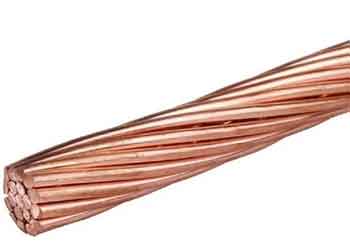
A conductor is a material that allows electric current to flow easily due to low electrical resistance. Metals such as copper and aluminum are commonly used as electrical conductors in wiring, cables, and power distribution systems.


What is the Best Definition of a Conductor?

The most comprehensive definition of a good conductor of electricity takes into account several key factors:

  • Conducts Electricity: A conductor must allow the flow of electrical charge (electrons) with minimal resistance.
  • Free Electrons: A large number of free electrons is essential for efficient conduction.
  • Material Properties: The type of material (e.g., metal, electrolyte) and its atomic structure determine how well it conducts.


What is the Basic Knowledge of a Conductor?

  • Examples: Common examples include metals like copper, silver, gold, and aluminum. Water containing dissolved salts (electrolytes) is also a conductor.
  • Applications: They are used in electrical wires, cables, electronic components, and in various industrial processes.
  • Safety: Handling conductors carrying electrical current requires caution to avoid electric shock.


Conductivity in Metals

Metals such as copper, silver, and gold are renowned for their superior conductivity. Copper is widely used in electrical wiring because it offers a good balance between cost and conductivity. Silver, while having the highest conductivity, is less commonly used due to its high cost. Aluminum, another good conductor, is often used in power lines because it is lighter than copper despite having slightly lower conductivity.


Conductors vs. Insulators

Understanding conductors involves comparing them to insulators. While conductors allow the flow of electric charge, insulators do not. Insulators, such as rubber, glass, and certain plastics, have tightly bound electrons that do not move freely, preventing the flow of electrical current. This distinction is crucial in designing electrical systems to ensure that electricity flows only where it is intended and is safely contained.


Applications of Conductors

Conductors are used in numerous applications, from simple household wiring to complex electronic devices. They are essential in forming the circuits that power everything from light bulbs to computers. Their ability to transfer electric charge efficiently makes them indispensable in modern technology and infrastructure.

Conductors are materials that allow the easy flow of electrical charge, primarily because their electrons are free to move. This property is fundamental to the operation of electrical circuits and devices, making conductors a key component in both everyday technology and advanced engineering applications.?


Related Articles

 

Related News

Gore Electricity

Gore electricity encompasses grid operations, power distribution, voltage regulation, substations, transformers, switchgear, smart metering, and safety compliance under IEC/IEEE standards, delivering reliable supply, demand management, and renewable integration for local consumers.   Gore Electricity: Real-World Examples and Uses Gore Electricity seems to be the attention of everyone these days - but mostly negative attention from political opponents and righteous environmentalists. The fact that former vice president and global warming solutions advocate Al Gore uses twenty times more electricity in one year than the average American, says exactly what? While debates about individual footprints persist, households can make measurable progress by…
View more

Faraday's Law of Induction Explained

Faraday’s Law of Induction explains how changing magnetic fields induce electromotive force (EMF) in conductors, forming the basis of electromagnetism that powers electric generators, transformers, and many modern electrical technologies.   How Faraday's Law of Induction Works History In 1831, Michael Faraday demonstrated through experiments that a changing magnetic field could induce an electric current in a nearby conductor. These experiments laid the foundation for electromagnetic induction, marking one of the most significant discoveries in physics and electrical engineering (Encyclopedia Britannica).   Theory and Mechanisms Faraday’s Law is one of the four Maxwell’s equations, expressed mathematically as the Maxwell–Faraday equation,…
View more

Electricity Forum Electricity Pages

Electricity pages organize energy rates, tariffs, plans, kWh usage insights, smart meter data, renewable options, provider comparisons, billing guidance, and grid updates to help households and businesses optimize consumption and cut costs.   Key Concepts of Electricity Pages Electricity is not a non-renewable natural energy resource that is mined or pumped from the ground. Electric Energy is a manufactured product. Actually, electricity is a "secondary energy source". We manufacture it from the conversion of other "primary energy sources" like coal, natural gas, oil, nuclear power and other natural sources. The energy sources we use to make Electric Energy can be renewable…
View more

Electricity Definition

Electricity definition outlines the flow of electric charge as current under voltage in circuits, governed by electric fields, resistance, and power, enabling AC/DC transmission, electromagnetism, conduction in conductors, and energy conversion across systems.   Why Understanding the Electricity Definition Is Important Electricity Definition: Electricity is a fundamental concept in physics that refers to the flow of electric charge through a conductor. It is an essential aspect of modern life and powers most devices we use daily. It can be generated in various ways. Several basic characteristics are used to measure it, including voltage, current, and resistance. Therefore, understanding an electricity definition…
View more

Conductor Definition

A conductor is a material that allows electric current to flow easily due to low electrical resistance. Metals such as copper and aluminum are commonly used as electrical conductors in wiring, cables, and power distribution systems.   What is the Best Definition of a Conductor? The most comprehensive definition of a good conductor of electricity takes into account several key factors: Conducts Electricity: A conductor must allow the flow of electrical charge (electrons) with minimal resistance. Free Electrons: A large number of free electrons is essential for efficient conduction. Material Properties: The type of material (e.g., metal, electrolyte) and its…
View more

3 Phase Power Explained

3 phase power uses three alternating currents that deliver steady voltage for motors, industrial equipment, and commercial loads. It improves efficiency, supports balanced loads, and reduces conductor size compared to single-phase systems.   Understanding How Three-Phase Power Works 3 phase power has become the standard for commercial and industrial electricity because it delivers energy in a smoother, more reliable way than single-phase service. Instead of relying on a single alternating-voltage waveform, the system uses three waveforms that rise and fall at evenly spaced intervals. The 120-degree separation between them means the combined output never drops to zero. Motors start more…
View more

Sign Up for Electricity Forum’s Newsletter

Stay informed with our FREE Newsletter — get the latest news, breakthrough technologies, and expert insights, delivered straight to your inbox.

Electricity Today T&D Magazine Subscribe for FREE

Stay informed with the latest T&D policies and technologies.
  • Timely insights from industry experts
  • Practical solutions T&D engineers
  • Free access to every issue

Download the 2026 Electrical Training Catalog

Explore 50+ live, expert-led electrical training courses –

  • Interactive
  • Flexible
  • CEU-cerified