Latest Building Automation Articles

Energy Management
Energy management enhances power systems through smart grid controls, demand response, load forecasting, SCADA, and IoT sensors, improving energy efficiency, peak shaving, power quality, and renewable integration across industrial and utility operations.
Energy Management: Real-World Examples
Energy management (EM) is a crucial practice today, helping businesses and individuals reduce their carbon footprint, save money, and contribute to a more sustainable future. By incorporating key elements such as efficiency, demand response, building automation, audits, smart grid technology, HVAC optimization, conservation, renewable energy, monitoring, and analytics, a comprehensive EM program can lead to significant savings and environmental benefits.
As the world…
View more
Sign Up for Electricity Forum’s Building Automation Newsletter
Stay informed with our FREE Building Automation Newsletter — get the latest news, breakthrough technologies, and expert insights, delivered straight to your inbox.
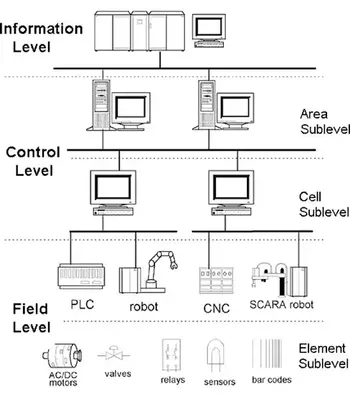
Hierarchical Levels in Industrial Networks
Hierarchical Levels Industrial Networks align device, control, and enterprise layers across PLCs, SCADA, MES, and ERP, using fieldbus, Ethernet/IP, and Profinet to ensure deterministic control, real-time data, cybersecurity, and scalable OT-IT integration.
Hierarchical Levels in Industrial Networks: Overview and Best Practices
The industrial automation systems can be very complex, and it is usually structured into several hierarchical levels. Each of the hierarchical level has an appropriate communication level, which places different requirements on the communication network. Figure 1.1 shows an example of the hierarchy of an industrial automation system. For a broader overview of protocols and trends, industrial automation…
View more
What is Building Automation - Energy Control Explained
What is building automation? An integrated BAS/BMS using sensors, PLCs, and SCADA to control HVAC, lighting, power distribution, VFDs, and safety systems, improving energy management, demand response, monitoring, reliability, and analytics.
What Is Building Automation?
What is Building Automation?Building automation is crucial in creating sustainable, efficient, and comfortable living and working environments. By incorporating advanced technologies like IoT and data analytics, building automation systems can optimize energy consumption, enhance occupant comfort, and promote cost-effective building management. As technology continues to evolve, building automation's potential benefits and applications are set to expand further, making it an essential aspect of modern building…
View more

Green Energy
Green energy integrates renewable electricity from solar, wind, and hydro into smart grids using power electronics, advanced inverters, energy storage, and grid automation to enhance reliability, power quality, and low-carbon transmission.
Green Energy Fundamentals
Green energy, often synonymous with renewable energy, has gained significant attention in recent years as the world seeks to reduce its reliance on fossil fuels, minimize environmental damage, and promote a more sustainable future. This shift towards clean energy resources helps reduce greenhouse gases and air pollutants and plays a vital role in conserving non-renewable resources and promoting efficiency.There are several green energy sources, each…
View more
Industrial Network Components Explained
Industrial network components enable reliable Ethernet, fieldbus, and IIoT connectivity across PLCs, HMIs, drives, and sensors, using managed switches, routers, protocol gateways, and cybersecurity firewalls for real-time control, redundancy, and deterministic data.
Key Concepts of Industrial Network Components
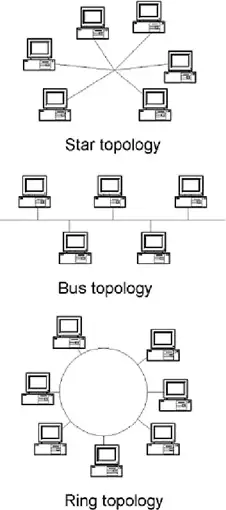
Industrial Network ComponentsIn larger industrial and factory networks, a single cable is not enough to connect all the network nodes together. We must define network topologies and design networks to provide isolation and meet performance requirements. In many cases, because applications must communicate across dissimilar networks, we need additional network equipment. The following are various types of network components and topologies:For…
View more

Automated Level Crossings - A futuristic solution enabling Smart City Infrastructure
Smart city automated level crossings integrate IoT sensors, AI, and V2X to optimize traffic management, enhance rail safety, enable predictive maintenance, and deliver real-time monitoring via 5G, edge computing, and SCADA platforms.
Smart City Automated Level Crossings Explained: What You Need to Know
Around the world, railway tracks pass through villages, towns, cities and metropolises which creates the problem of ubiquitous Level Crossings as they transect roads, highways, etc. The real-time train data, collected through Global Positioning System (GPS) satellites can be used to calculate critical distance to a level crossing. A sensor (receiver) keeps polling the approaching train…
View more
Energy Management Program - Improve Efficiency
Energy Management Program optimizes electrical loads via SCADA, submetering, and analytics, driving energy efficiency, demand response, peak shaving, load forecasting, and power factor correction to reduce kWh, cut OPEX, and improve power quality and reliability.
Energy Management Program Fundamentals
An energy management program is increasingly important in industrial, commercial, and institutional power systems due to growing concerns about energy efficiency, costs, and environmental impact. Implementing an effective energy management program (EMP) can help businesses save money, reduce their carbon footprint, and achieve sustainability goals. This article will delve into the key components of an energy management program and discuss…
View more