Crucial step towards completing nuclear plant achieved in Abu Dhabi
CSA Z463 Electrical Maintenance -
Our customized live online or in‑person group training can be delivered to your staff at your location.

- Live Online
- 6 hours Instructor-led
- Group Training Available
Barakah Unit 4 Cold Hydrostatic Testing validates reactor coolant system integrity at the Barakah Nuclear Energy Plant in Abu Dhabi, UAE, confirming safety, quality, and commissioning readiness under ENEC and KEPCO oversight.
Context and Background
Pressure test of Unit 4's reactor coolant system, confirming integrity and safety for commissioning at Barakah.
25% above normal operating pressure verified.
Welds, joints, and high-pressure components inspected.
Supports safe, reliable, emissions-free baseload power.
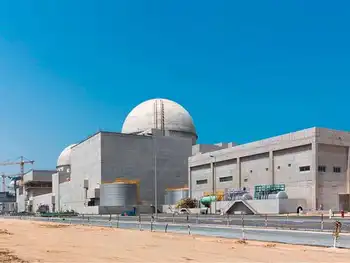
The Emirates Nuclear Energy Corporation (ENEC) has successfully completed Cold Hydrostatic Testing (CHT) at Unit 4 of the Barakah Nuclear Energy Plant, the Arab world’s first nuclear energy plant being built in the Al Dhafra region of Abu Dhabi, UAE. The testing incorporated the lessons learned from the previous three units and is a crucial step towards the completion of Unit 4, the final unit of the Barakah plant.
As a part of CHT, the pressure inside Unit 4’s systems was increased to 25 per cent above what will be the normal operating pressure, demonstrating, as seen across global nuclear projects, the quality and robust nature of the Unit’s construction. Prior to the commencement of CHT, Unit 4’s Nuclear Steam Supply Systems were flushed with demineralised water, and the Reactor Pressure Vessel Head and Reactor Coolant Pump Seals were installed. During the Cold Hydrostatic Testing, the welds, joints, pipes and components of the reactor coolant system and associated high-pressure systems were verified.
Mohammed Al Hammadi, Chief Executive Officer of ENEC said: “I am proud of the continued progress being made at Barakah despite the circumstances we have all faced in relation to COVID-19. The UAE leadership’s decisive and proactive response to the pandemic supported us in taking timely, safety-led actions to protect the health and safety of our workforce and our plant. These actions, alongside the efforts of our talented and dedicated workforce, have enabled the successful completion of CHT at Unit 4, which was completed in adherence to the highest standards of safety, quality, and security.
“With this accomplishment, we move another step closer to achieving our goal of supplying up to a quarter of our nation’s electricity needs through the national grid and powering its future growth with safe, reliable, and emissions-free electricity,” he added.
By the end of 2019, ENEC and Korea Electric Power Corporation (KEPCO), working with Korea Hydro & Nuclear Power (KHNP) on the project, had successfully completed all major construction work including major concrete pouring, installation of the Turbine Generator, and the internal components of the Reactor Pressure Vessel (RPV) of Unit 4, which paved the way for the commencement of testing and commissioning.
The testing at Unit 4 represents a significant achievement in the development of the UAE Peaceful Nuclear Energy Program, following the successful completion of fuel assembly loading into Unit 1 in March 2020, confirming that the UAE has officially become a peaceful nuclear energy operating nation. Preparations are now in the final stages for the safe start-up of Unit 1, which subsequently reached 100% power ahead of commercial operations, in the coming months.
ENEC is currently in the final stages of construction of units 2, 3 and 4 of the Barakah Nuclear Energy Plant, as China’s nuclear program continues its steady development globally. The overall construction of the four units is more than 94% complete. Unit 4 is more than 84 per cent, Unit 3 is more than 92 per cent and Unit 2 is more than 95 per cent. The four units at Barakah will generate up to 25 per cent of the UAE’s electricity demand by producing 5,600 MW of clean baseload electricity, as projects such as new reactors in Georgia take shape, and preventing the release of 21 million tons of carbon emissions each year – the equivalent of removing 3.2 million cars off the roads annually.