Coal cost for electricity increases 10 per cent
High Voltage Maintenance Training Online
Our customized live online or in‑person group training can be delivered to your staff at your location.

- Live Online
- 12 hours Instructor-led
- Group Training Available
"Power producers may suggest to the government raise electricity tariffs in order to counter coal price increases of an average of 30 yuan per ton this year," said Ye Rongsi, senior adviser with the China Electricity Council (CEC).
But an analyst from the China Coal Industry Association, who did not want to be named, said power companies cannot easily raise prices as they face an on-grid electricity price bidding mechanism.
Rising coal prices have long been a bone of contention between power generators and coal producers in China. Electricity giants continue to insist that rising coal prices have undermined their profits.
Compared with the coal prices, which are more market-oriented, the nation's electricity prices are still controlled by the government.
Due to the rising cost of coal, the country's main resource for electricity production, the Chinese government decided to approve a mechanism linking coal and power prices at the end of 2004.
Under the linkage, electricity prices will move in line with coal price increases. If coal prices rise by more than 5 percent in a six-month period, electricity prices will be adjusted by the government.
Under the mechanism, 70 percent of coal price increases are passed on to consumers. Power generating firms absorb the remaining 30 percent.
Leaving key energy prices to market forces is an inevitable step on the road to a market-oriented economy, said Zhou Dadi, former director of the Energy Research Institute of the National Development and Reform Commission (NDRC).
Just a few days ago China's electricity giants and coal producers gathered in Guilin, South China's Guangxi Zhuang Autonomous Region, to sign this year's electricity coal supply contracts.
The recent gathering is the first after the government scrapped its previous coal procurement meeting. Unlike meetings in the past, electricity companies agreed to increases in coal prices without traditional tough negotiation.
Some analysts said the rapid development of the nation's electricity industry has meant power companies need more coal to fuel expansion, and are not in a position to take a tough stance.
And electricity consumption is certainly on the rise. Datang International Power Generation Co Ltd, one of the five main power companies in China, says the company produced 93.5 billion kilowatt- hours of electricity in 2006, an increase of 31.65 percent over 2005.
The rising price of coal is in part due to environmental and safety factors that have been included in overall cost calculations, said analysts.
"The coal price rise in China will be a gradual process," said Jiang Zhimin, vice-chairman of the China National Coal Association, "and the nation should further improve its coal pricing system to make it more market-oriented."
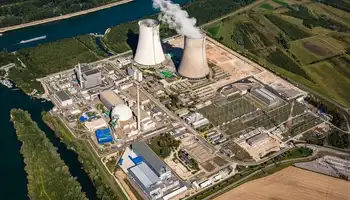
Coal-fired power plants account for over two thirds of the nation's installed capacity. Last year the nation's total generating capacity surpassed 622 gigawatts, an increase of 20.3 percent, according to stastics of CEC.
And the proportion of coal-fired power plants saw a rise in the total installed capacity amounting to over 77 percent.
The coal industry has also seen rapid development, producing 1.86 billion tons of coal in the first 11 months of 2006, an increase of 12 percent, said the National Bureau of Statistics.
China's coal output is expected to reach 2.6 billion tons in 2010 as it continues to be the nation's most important energy resource, according to an NDRC outline of the 11th Five-Year Plan (2006-10) for the coal industry.
Despite the nation's economic reform, technological innovation and energy-saving efforts, demand for coal will continue to grow, said the outline.